CityLink Tower

A Vertical Connector Across Chicago’s Urban Divide
Reconnecting the City

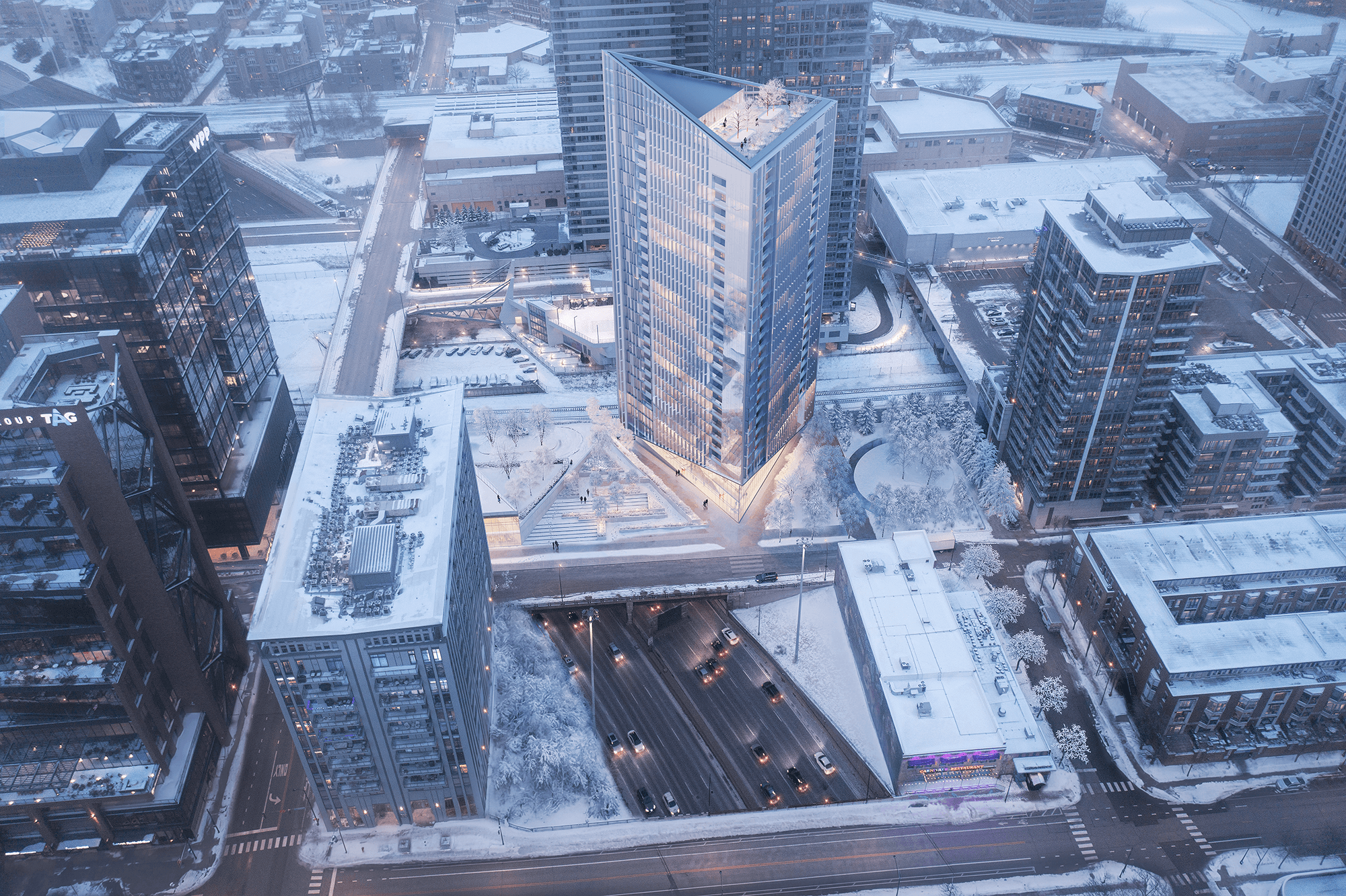
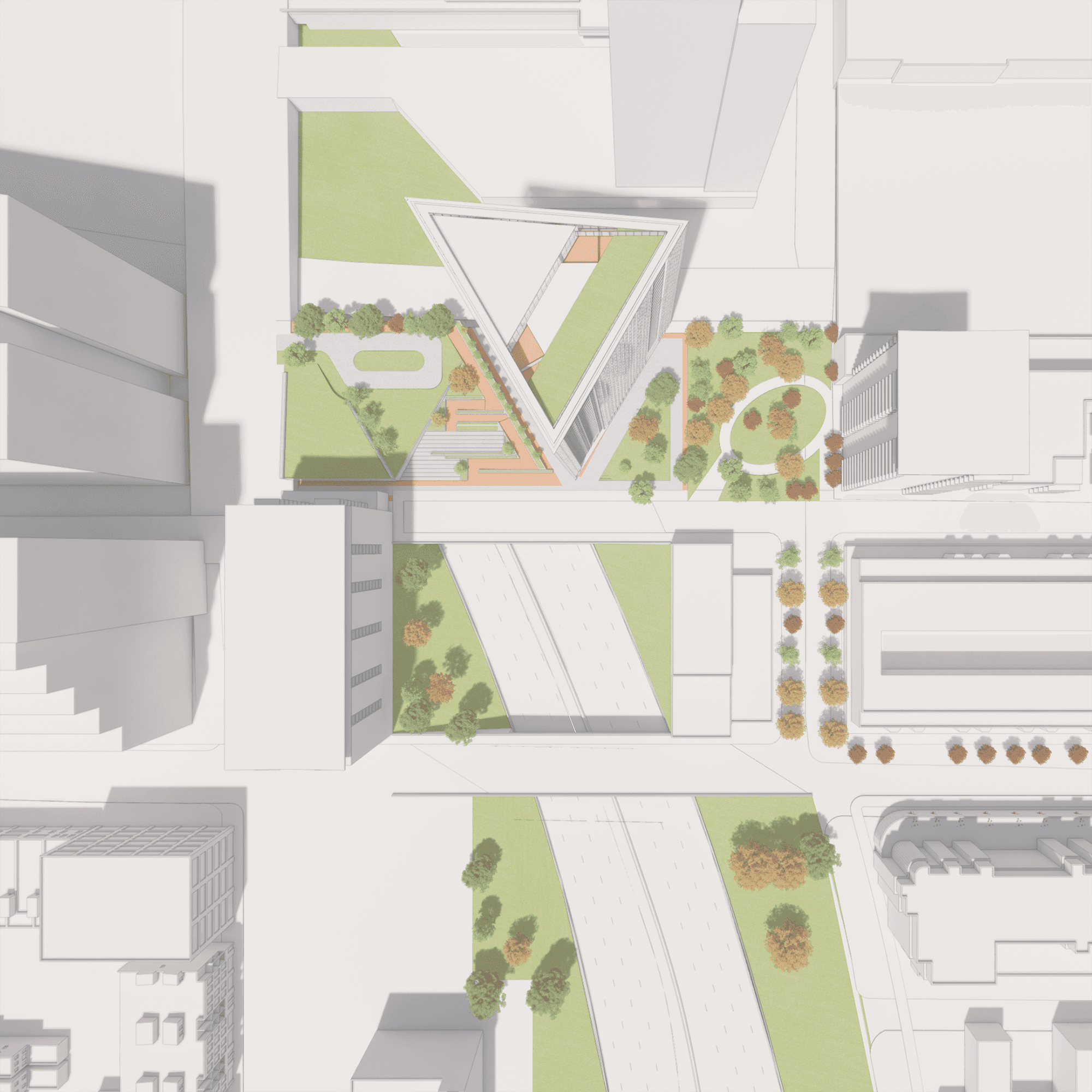
CityLink Tower responds to one of Chicago’s most persistent urban conditions: the physical and social divide created by the Kennedy Expressway. For decades, this infrastructure corridor has separated the Loop from the West Loop, leaving behind fragmented parcels that resist conventional development and weaken neighborhood continuity. Located on a narrow triangular site formed by highway geometry, the project reframes this residual condition as an opportunity for urban repair. Rather than treating the expressway edge as a liability, CityLink Tower establishes a vertical civic connector that restores pedestrian continuity, introduces mixed-use density, and reclaims overlooked infrastructure land as an active part of the city.

Year

2026

Industry

High-Rise Mixed-Use, Infrastructure-Adjacent Urban Development

Scope of work

/

Residential Architecture

/

Mixed-Use and Housing

/

Urban Design and Frameworks

Timeline

16 weeks

Client

Confidential

Reconnecting the City

CityLink Tower responds to one of Chicago’s most persistent urban conditions: the physical and social divide created by the Kennedy Expressway. For decades, this infrastructure corridor has separated the Loop from the West Loop, leaving behind fragmented parcels that resist conventional development and weaken neighborhood continuity. Located on a narrow triangular site formed by highway geometry, the project reframes this residual condition as an opportunity for urban repair. Rather than treating the expressway edge as a liability, CityLink Tower establishes a vertical civic connector that restores pedestrian continuity, introduces mixed-use density, and reclaims overlooked infrastructure land as an active part of the city.

Year

2026

Industry

High-Rise Mixed-Use, Infrastructure-Adjacent Urban Development

Scope of work

/

Residential Architecture

/

Mixed-Use and Housing

/

Urban Design and Frameworks

Timeline

16 weeks

Client

Confidential

Context and Opportunity

Context and Opportunity

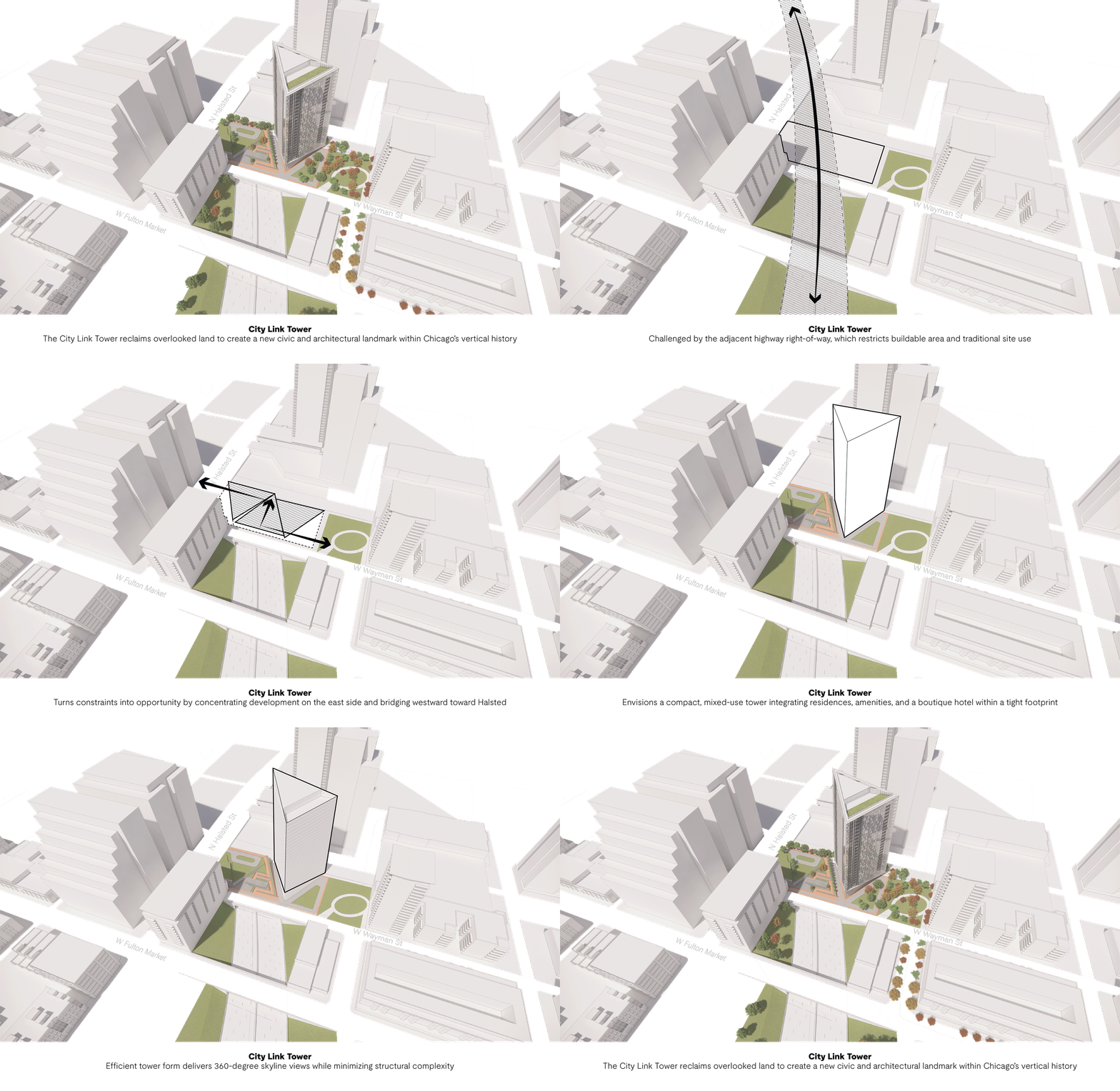
The site occupies a highly visible but difficult location shaped by traffic, noise, and limited access. Despite its proximity to downtown employment centers and transit, its irregular geometry and adjacency to highway infrastructure have historically constrained development.

CityLink Tower responds with a compact vertical strategy that embraces density where horizontal expansion is impossible. By reorienting the site from edge to gateway, the project transforms a former barrier into a point of connection between districts, mobility systems, and daily urban life.
Intent and Urban Framework

Intent and Urban Framework

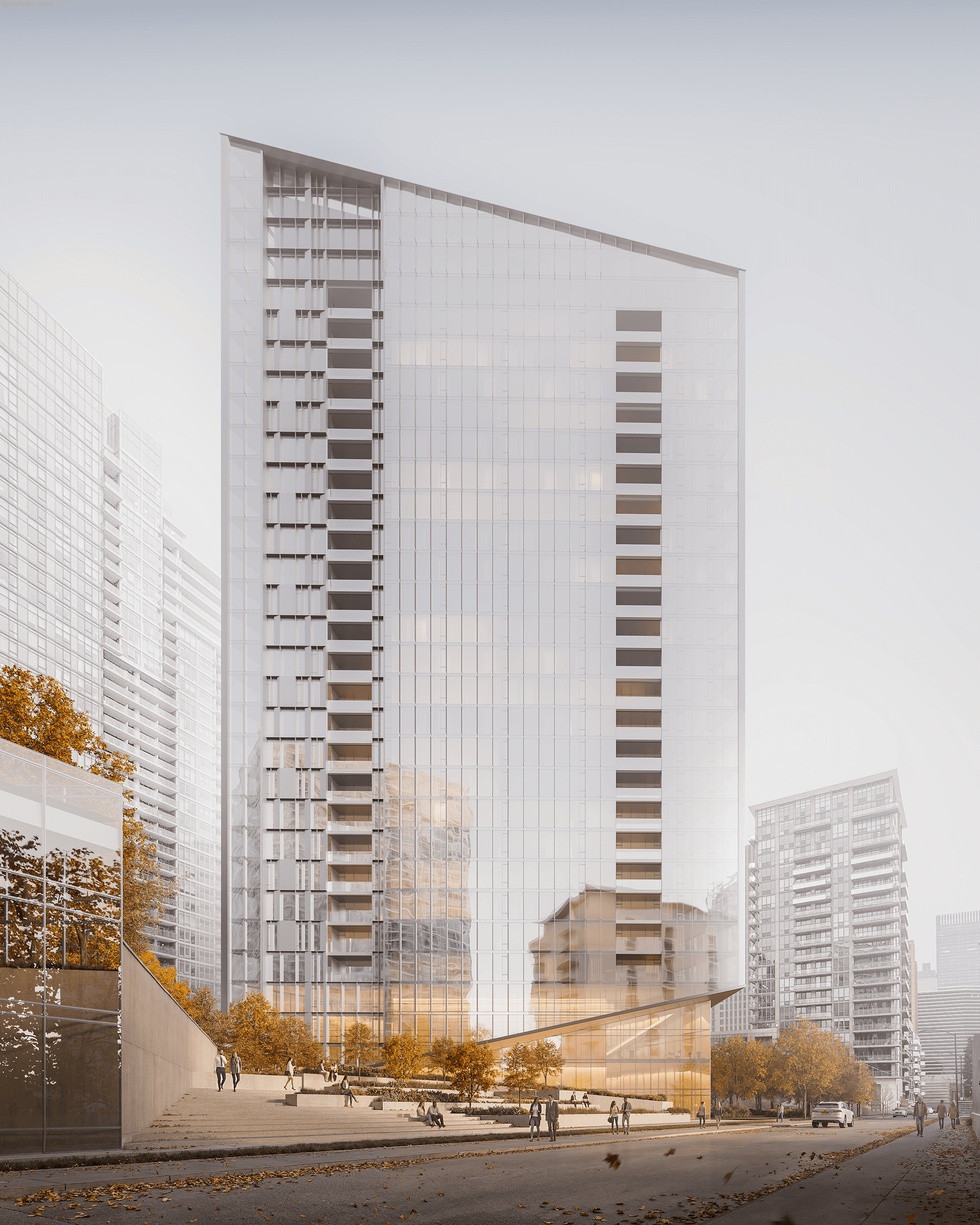
CityLink Tower is conceived as part of a larger urban system rather than a standalone object. The project establishes a clear framework that aligns architecture, landscape, and infrastructure to prioritize connectivity, legibility, and public benefit.

Pedestrian continuity is reinforced at the ground plane while the tower’s vertical expression operates as a visible marker of reconnection at the skyline scale. Together, these moves repair a long-standing urban seam while accommodating growth in a disciplined and context-aware manner.
Program Strategy and Mixed-Use Integration

Program Strategy and Mixed-Use Integration

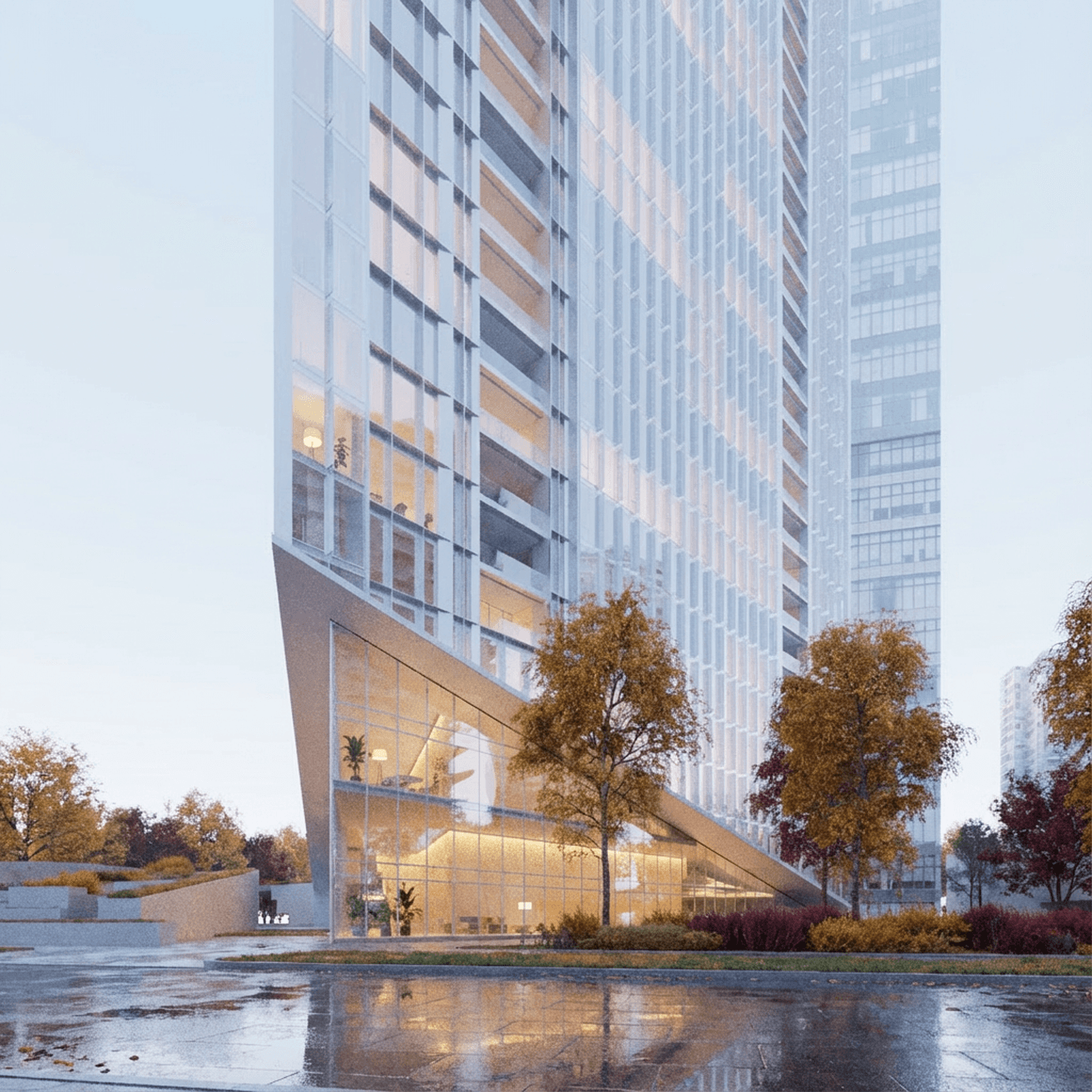
The building organizes a flexible vertical program that supports residential, hotel, and shared living uses within a single coherent structure. Efficient floor plates allow program mixes to evolve over time without undermining spatial quality or operational clarity.

Active uses are concentrated at the base, including retail, shared lobbies, and community-oriented amenities. This strategy ensures continuous engagement with the public realm while maintaining repeatable, buildable planning for upper levels.
Public Realm and Pedestrian Connectivity

Public Realm and Pedestrian Connectivity

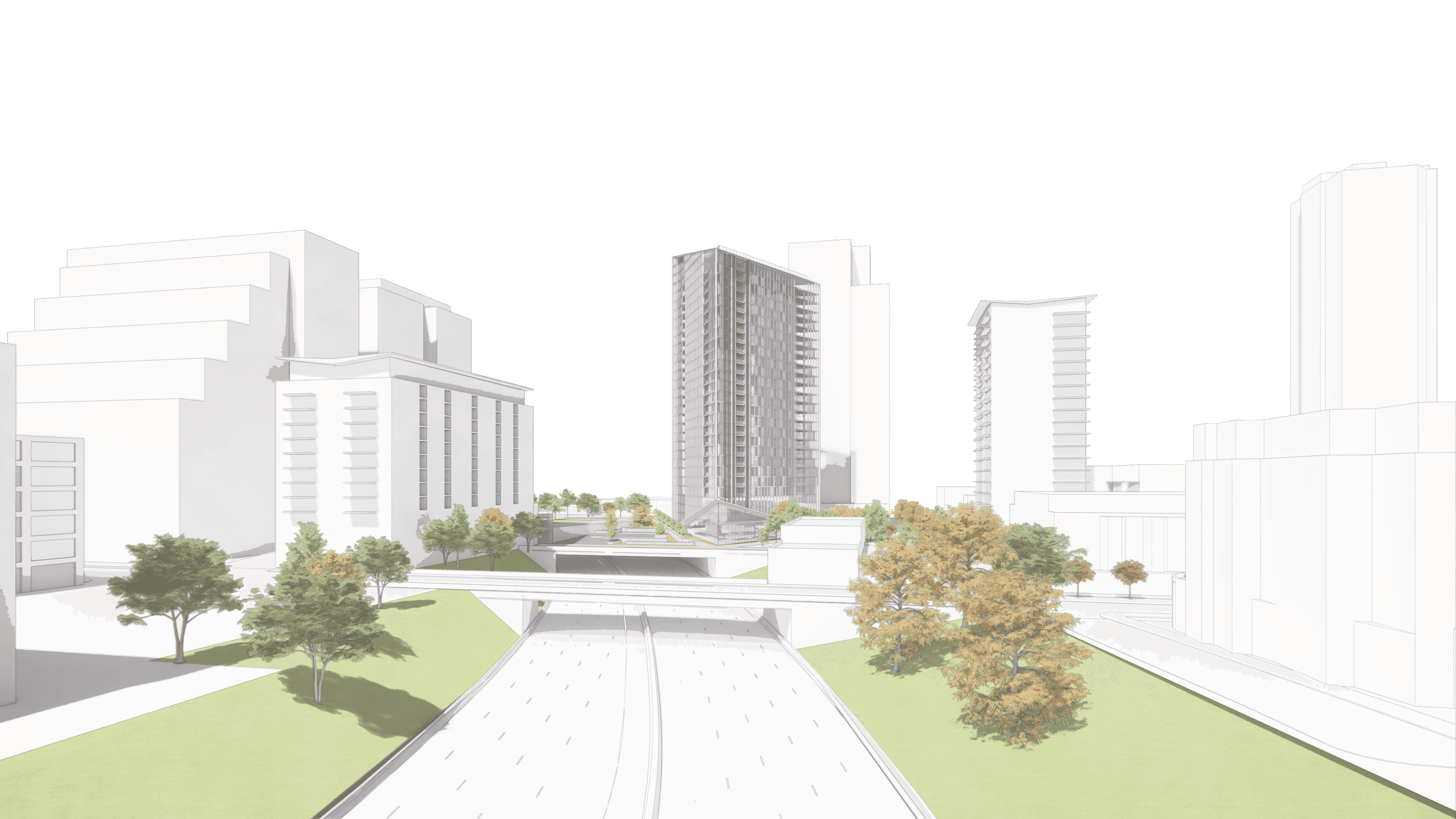
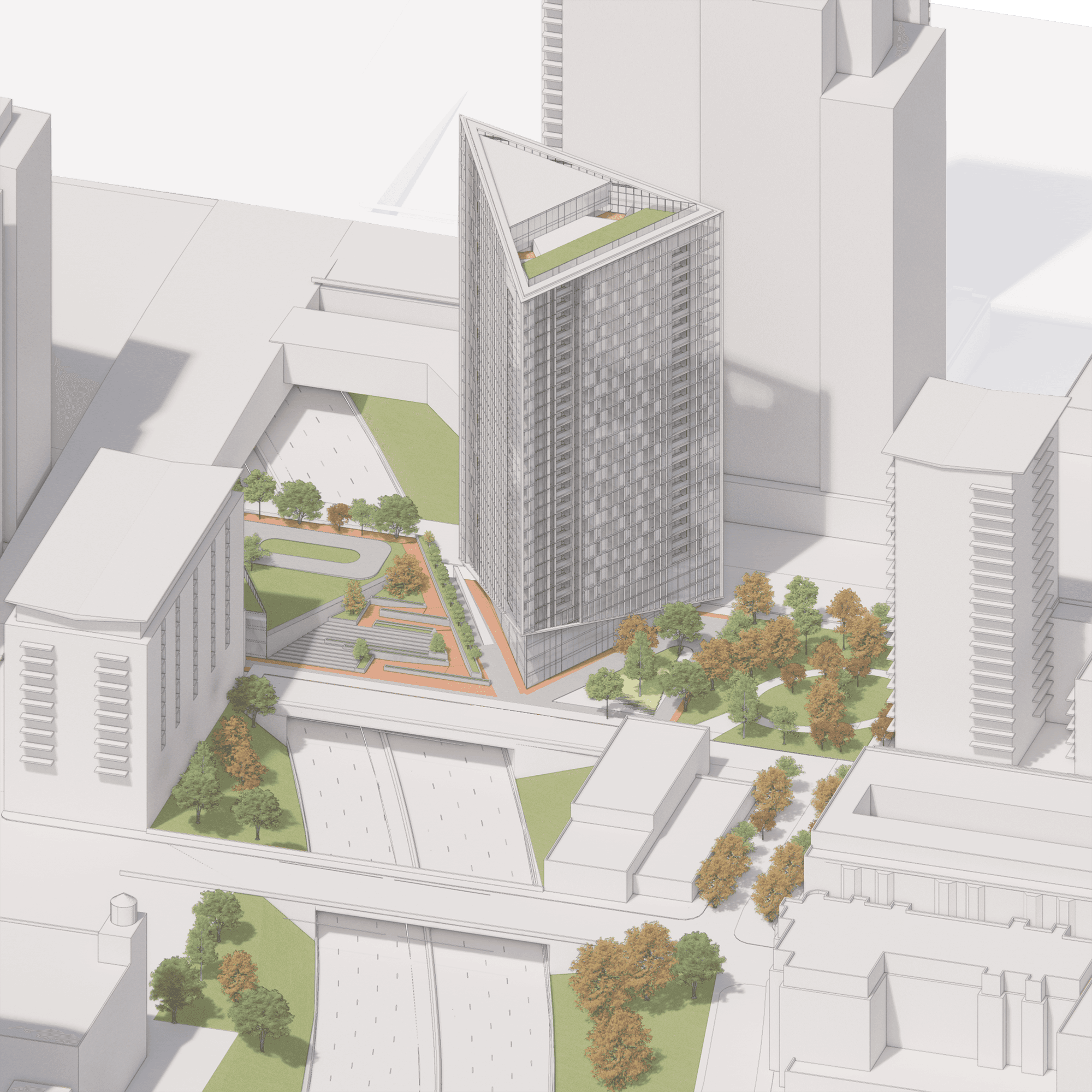
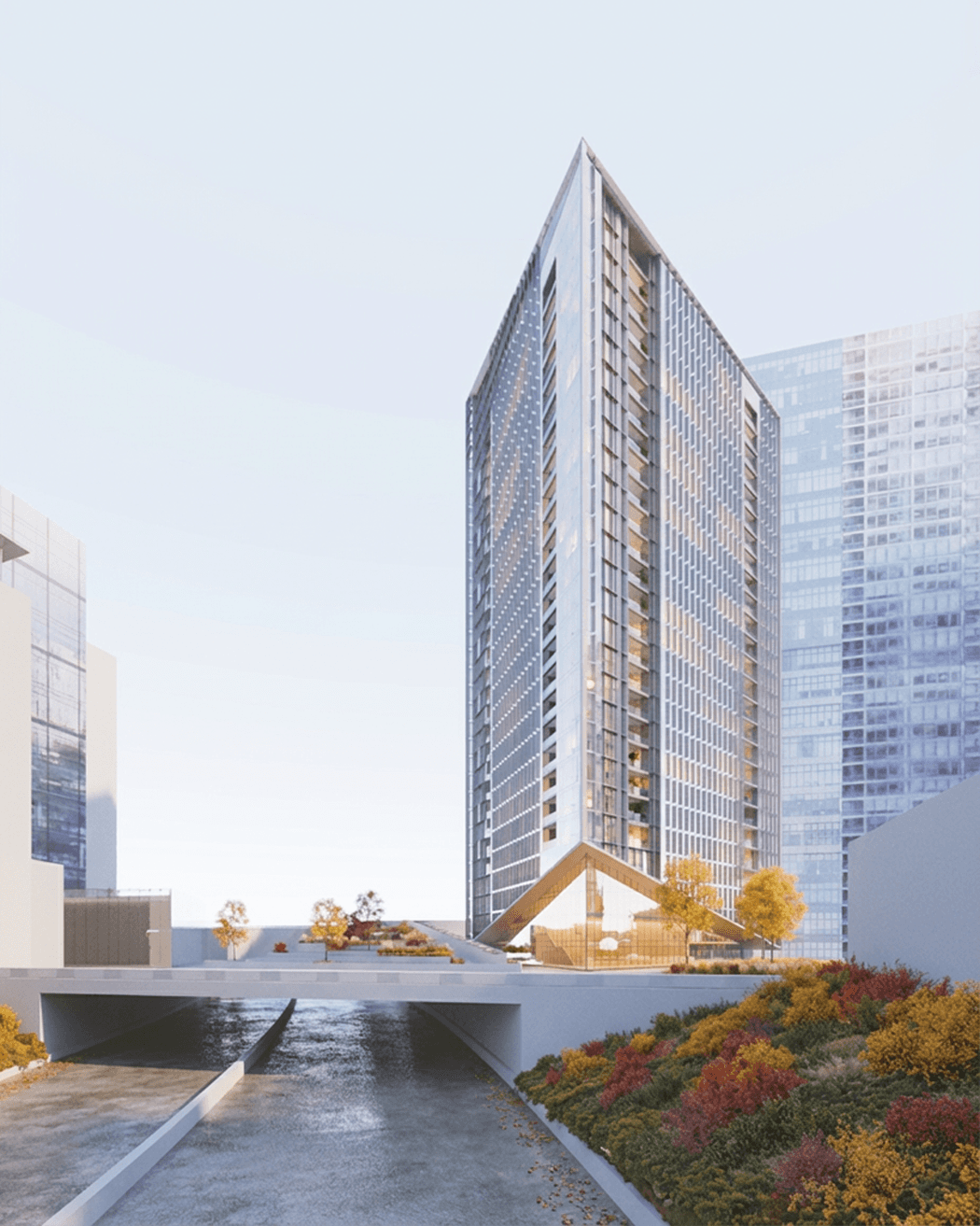
Public space is treated as essential urban infrastructure. A landscaped plaza and protected ground plane establish a pedestrian-oriented environment adjacent to the expressway, offering relief from traffic conditions while improving east–west connectivity.

These spaces are designed for movement, informal gathering, and future programming. By prioritizing people over vehicles, the project converts a previously hostile edge into a civic threshold that supports safety, comfort, and daily use.
Form, Structure, and Environmental Performance

Form, Structure, and Environmental Performance

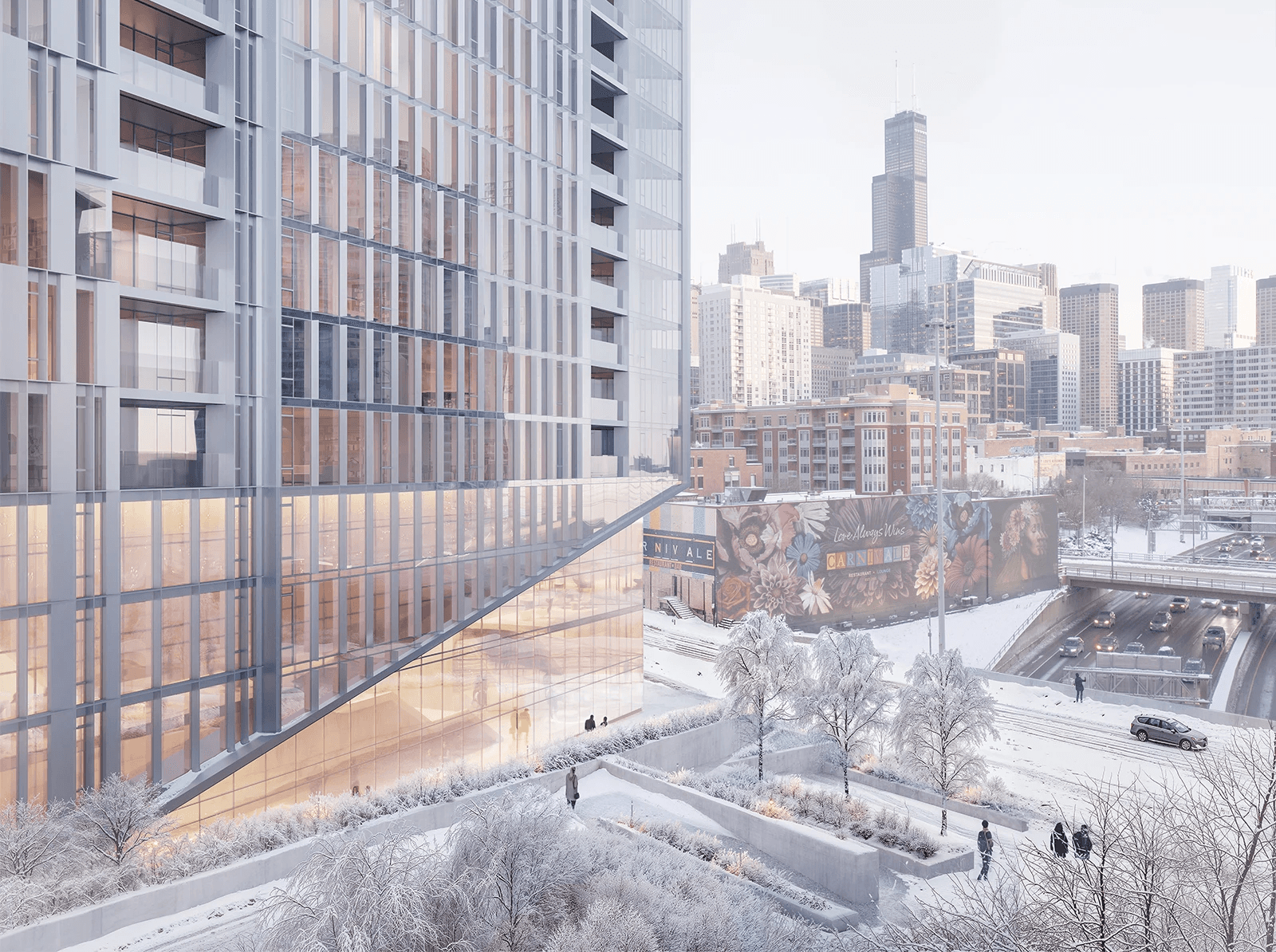
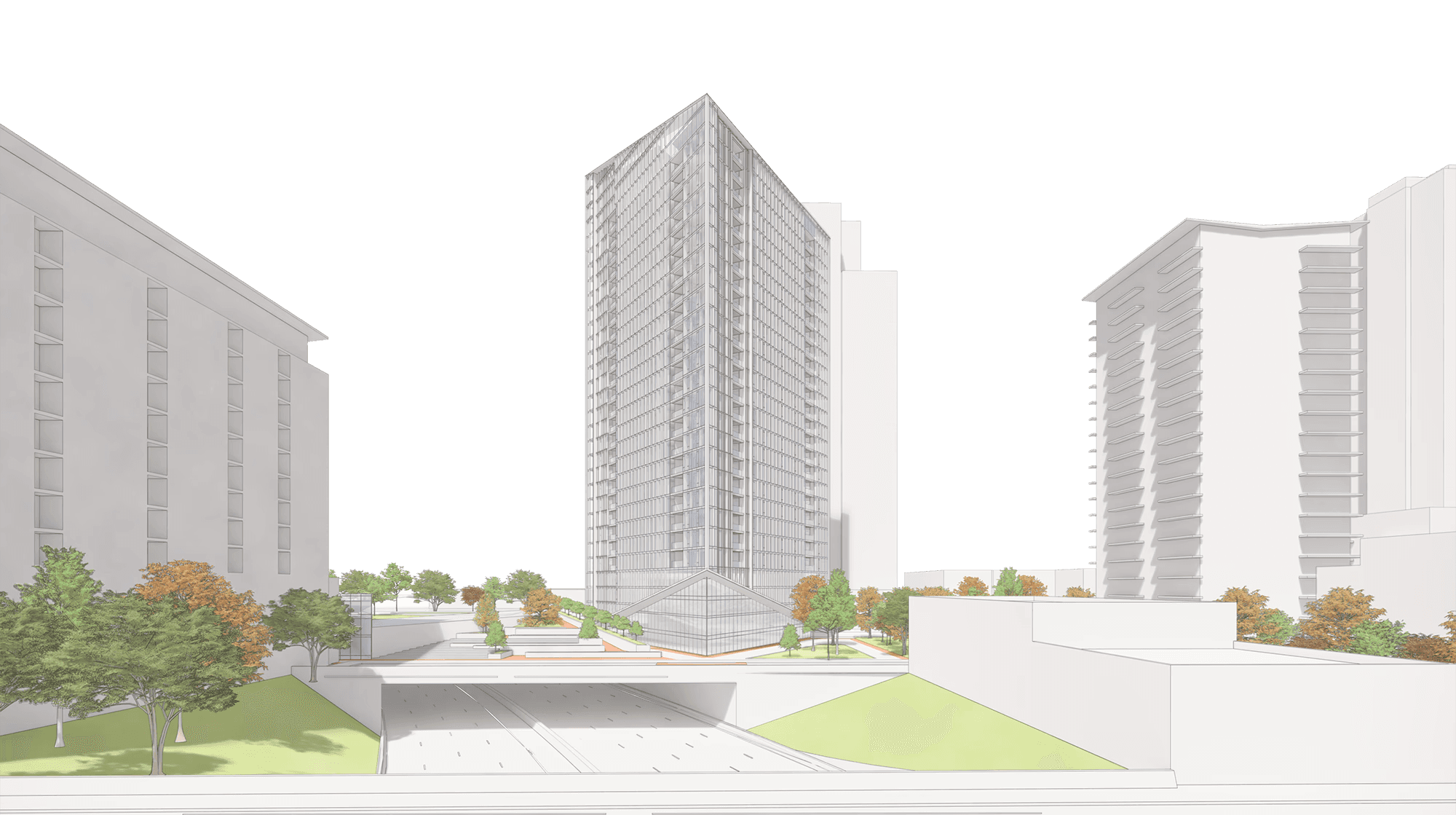
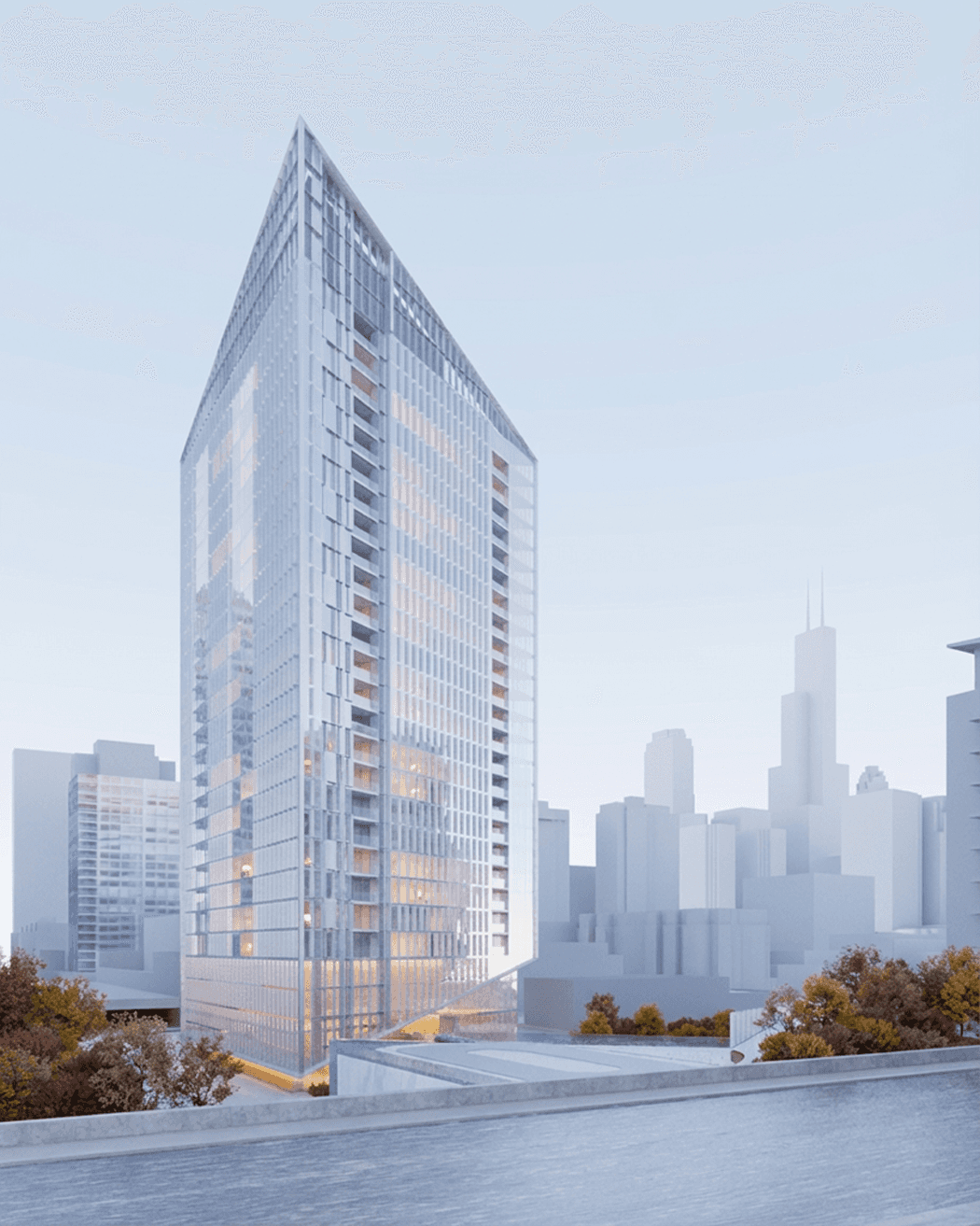
The triangular geometry of the site generates a slender tower with a clear structural logic and minimized footprint. The form maximizes daylight, views, and efficiency while reinforcing vertical continuity along the expressway corridor.

The facade system emphasizes clarity and repetition, supporting long-term performance and constructability. Environmental strategies are integrated into massing and orientation, reducing exposure to noise while improving interior comfort.
Civic Presence and Urban Identity

Civic Presence and Urban Identity

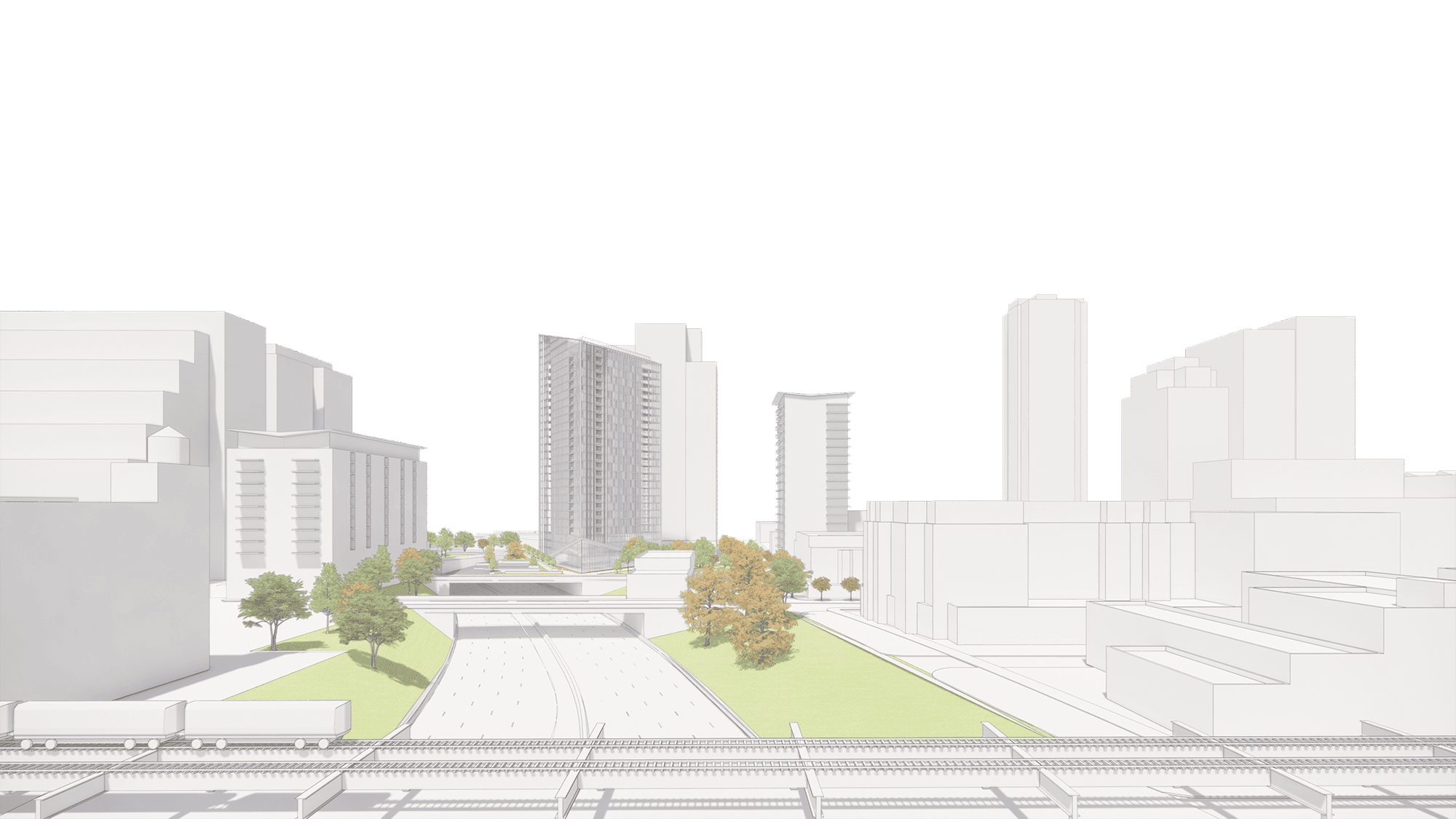
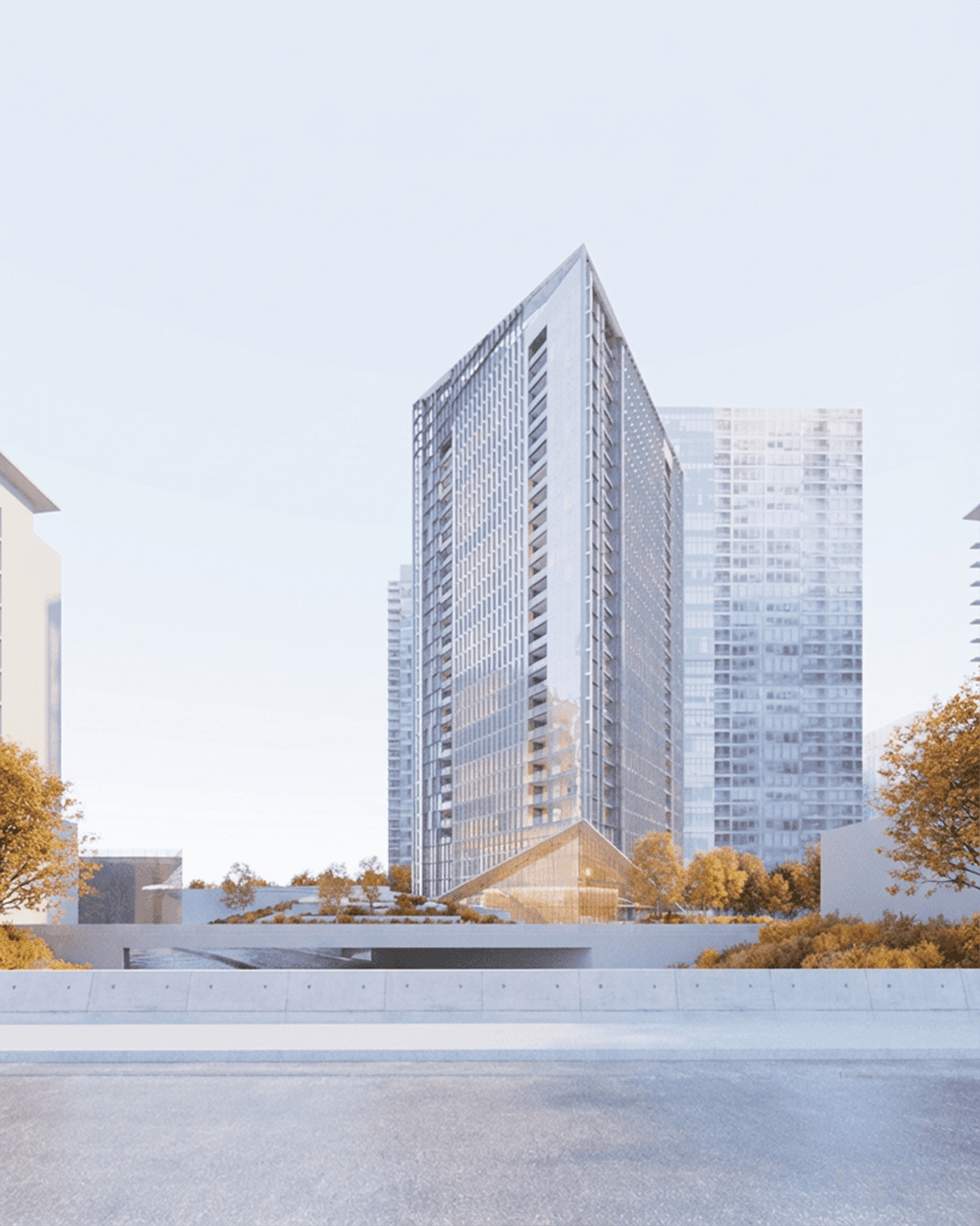
CityLink Tower establishes a visible civic marker along the Kennedy Expressway, signaling reconnection rather than separation. Its vertical form anchors the corridor and contributes to Chicago’s evolving skyline.

A rooftop amenity and observatory create a shared destination with panoramic city views, reinforcing the project’s role as an urban asset rather than a private enclave.
Infrastructure as Urban Opportunity

Infrastructure as Urban Opportunity

CityLink Tower reframes highway adjacency as a platform for long-term urban repair. By engaging directly with residual infrastructure geometry, the project demonstrates how density, public space, and pedestrian continuity can coexist within constrained sites.

Flexible floor plates, an adaptable ground plane, and integrated public connections allow the development to evolve alongside changing mobility patterns and urban priorities. The result is a resilient framework that restores continuity while supporting future growth.
A Model for Chicago’s Residual Sites

A Model for Chicago’s Residual Sites

CityLink Tower is not positioned as a singular solution, but as a repeatable approach for Chicago’s many underutilized infrastructure-adjacent parcels. Across the city, similar sites remain dormant despite their strategic location and development potential.

By aligning architectural clarity with feasibility, access, and public benefit, the project offers a scalable model for redevelopment. It suggests a future where infrastructure edges become active urban seams that support housing, economic vitality, and civic life.


Related Research.

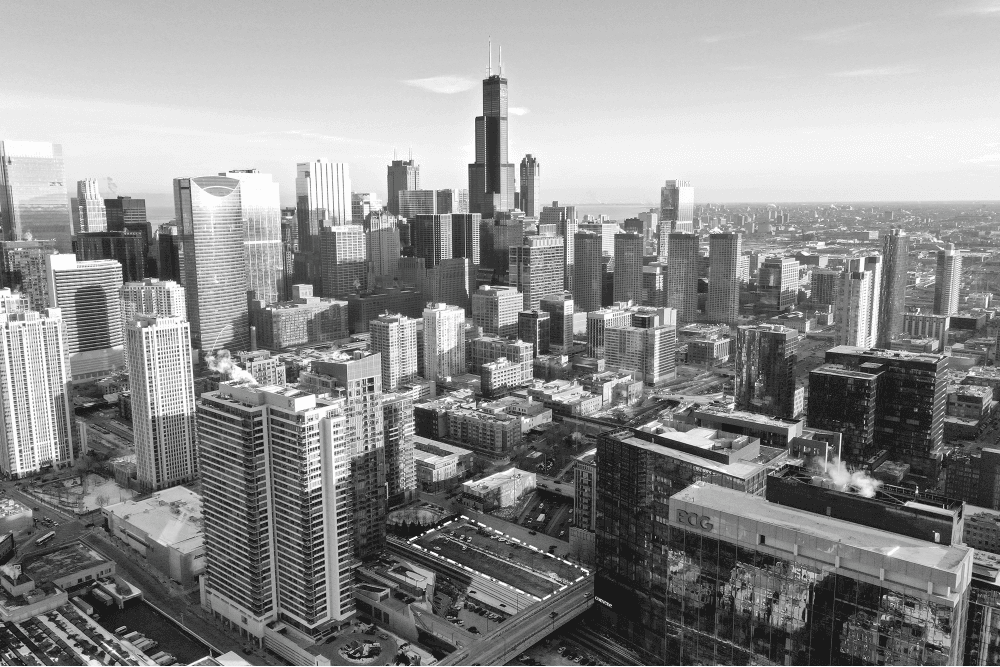
Urban-scale context and infrastructure relationships were informed by UAV and aerial documentation research, supporting early understanding of site constraints and city-scale connections.

(2016-25©)

Have a project in mind?

By submitting, you agree to our Terms and Privacy Policy.

© 2025 OAO®

Let’s talk.

Tell us about your project, big or small. We listen carefully and help turn early ideas into clear next steps.

Quick response.

If you’re ready to create and collaborate, we’d love to hear from you.

Clear next steps.

After the consultation, we’ll provide you with a detailed plan and timeline.

Dark gradiend background

Have a project in mind?

By submitting, you agree to our Terms and Privacy Policy.

Let’s talk.

Tell us about your project, big or small. We listen carefully and help turn early ideas into clear next steps.

Quick response.

If you’re ready to create and collaborate, we’d love to hear from you.

Clear next steps.

After the consultation, we’ll provide you with a detailed plan and timeline.

Dark gradiend background

Have a project in mind?

By submitting, you agree to our Terms and Privacy Policy.

© 2025 OAO®

Let’s talk.

Tell us about your project, big or small. We listen carefully and help turn early ideas into clear next steps.

Quick response.

If you’re ready to create and collaborate, we’d love to hear from you.

Clear next steps.

After the consultation, we’ll provide you with a detailed plan and timeline.

Dark gradiend background

Whether your project is a single home, a major renovation, or a complex urban district, we guide the design process with clarity and care.

Whether your project is a single home, a major renovation, or a complex urban district, we guide the design process with clarity and care.

Mariusz Klemens

Founder & Architect

Mariusz Klemens

Founder & Architect


Licensed in Illinois and Michigan
Professional Liability Insurance Maintained

Newsletter

Stay connected, subscribe for research updates, project news, and ways to engage with OAO.

© 2026 OAO® Open Architecture Office. All rights reserved.