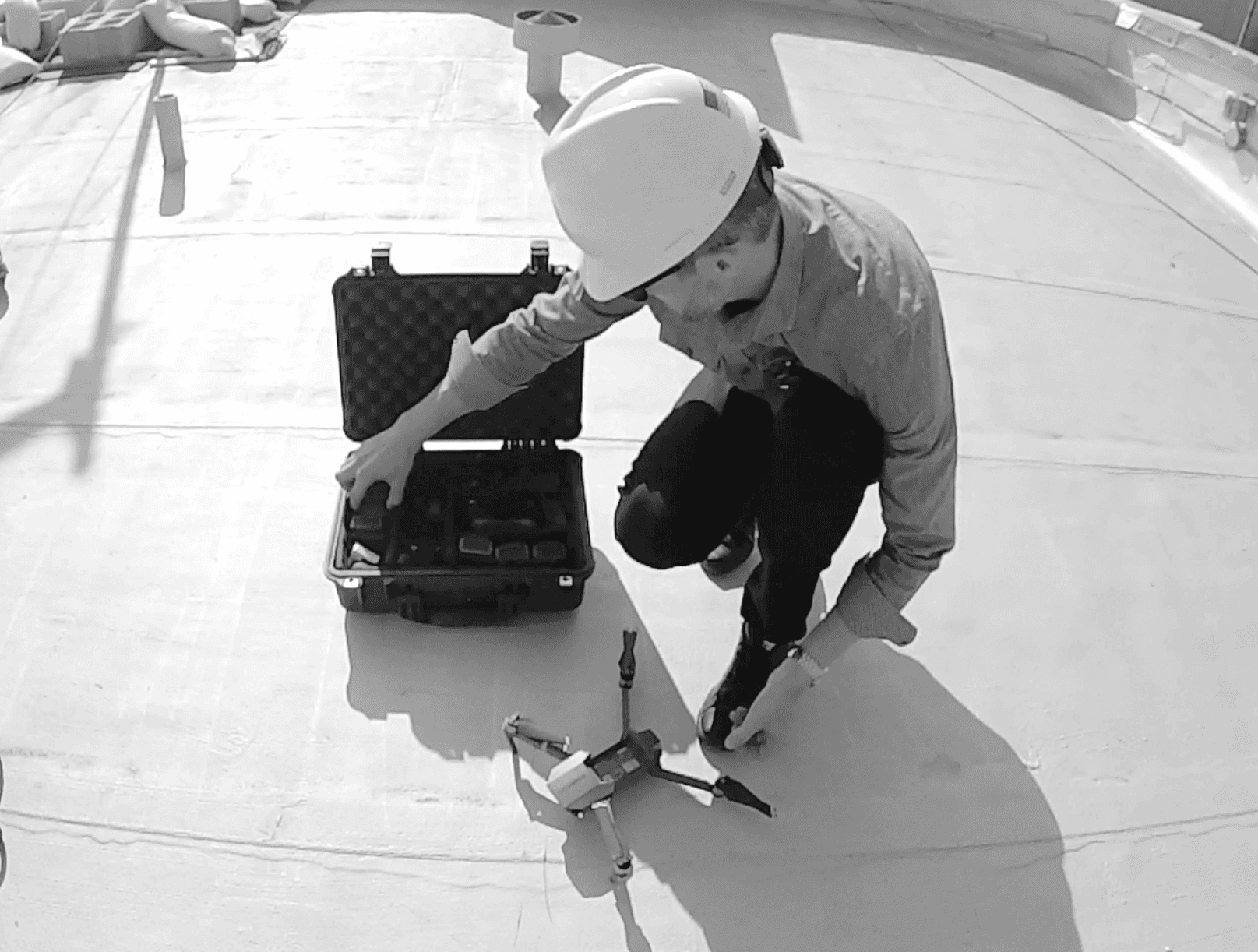

Clear understanding of context is essential to making responsible design decisions.
Site Context and Scale
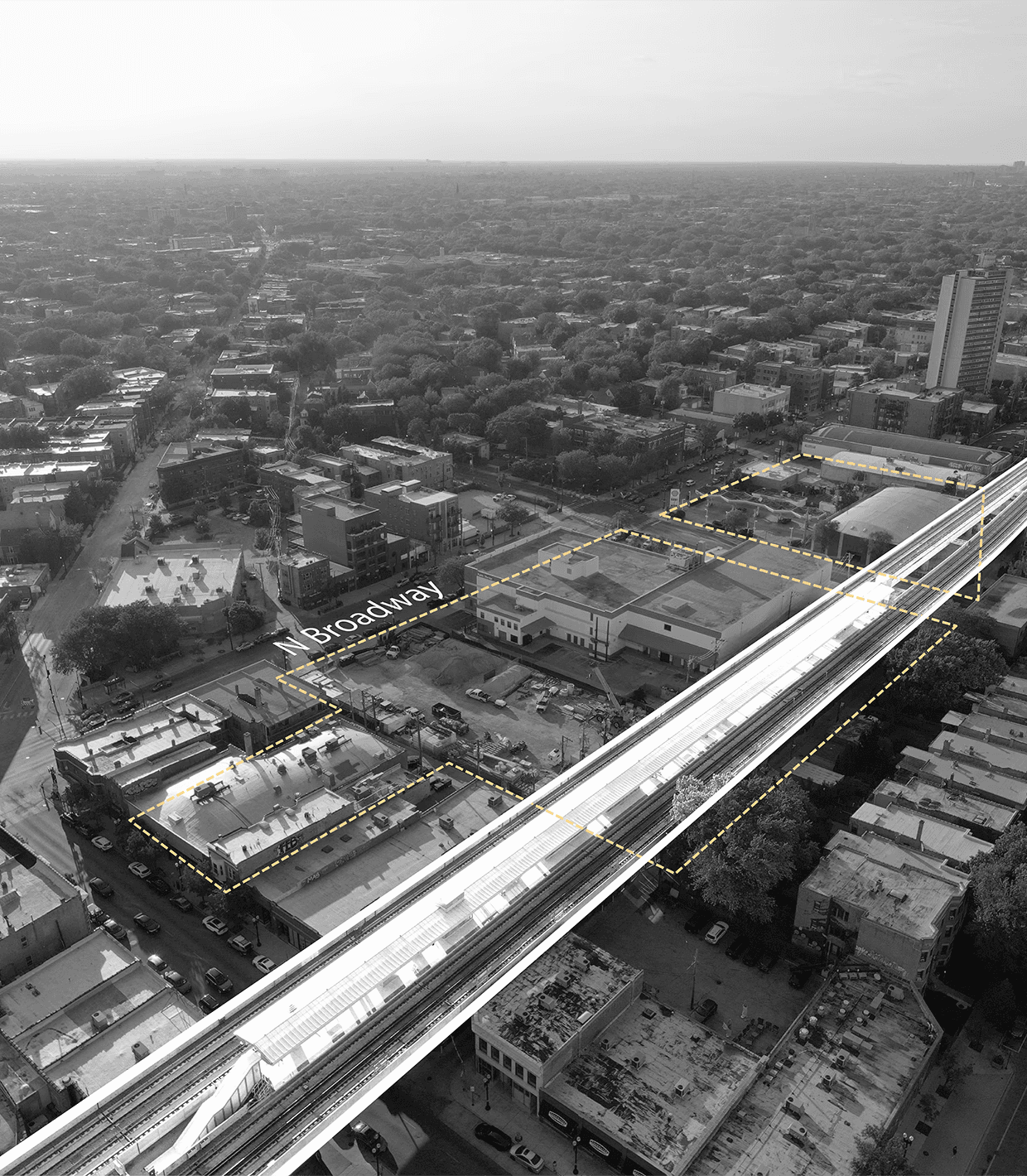
Aerial documentation allows design teams to see sites in relation to their surroundings, infrastructure, and landscape systems. This broader view supports early assessments of access, adjacencies, setbacks, and spatial relationships that are difficult to read from ground-level information alone.
For neighborhood-scale and corridor projects, UAV data helps establish a shared understanding of how individual sites connect to larger urban patterns.
Planning, Analysis, and Coordination
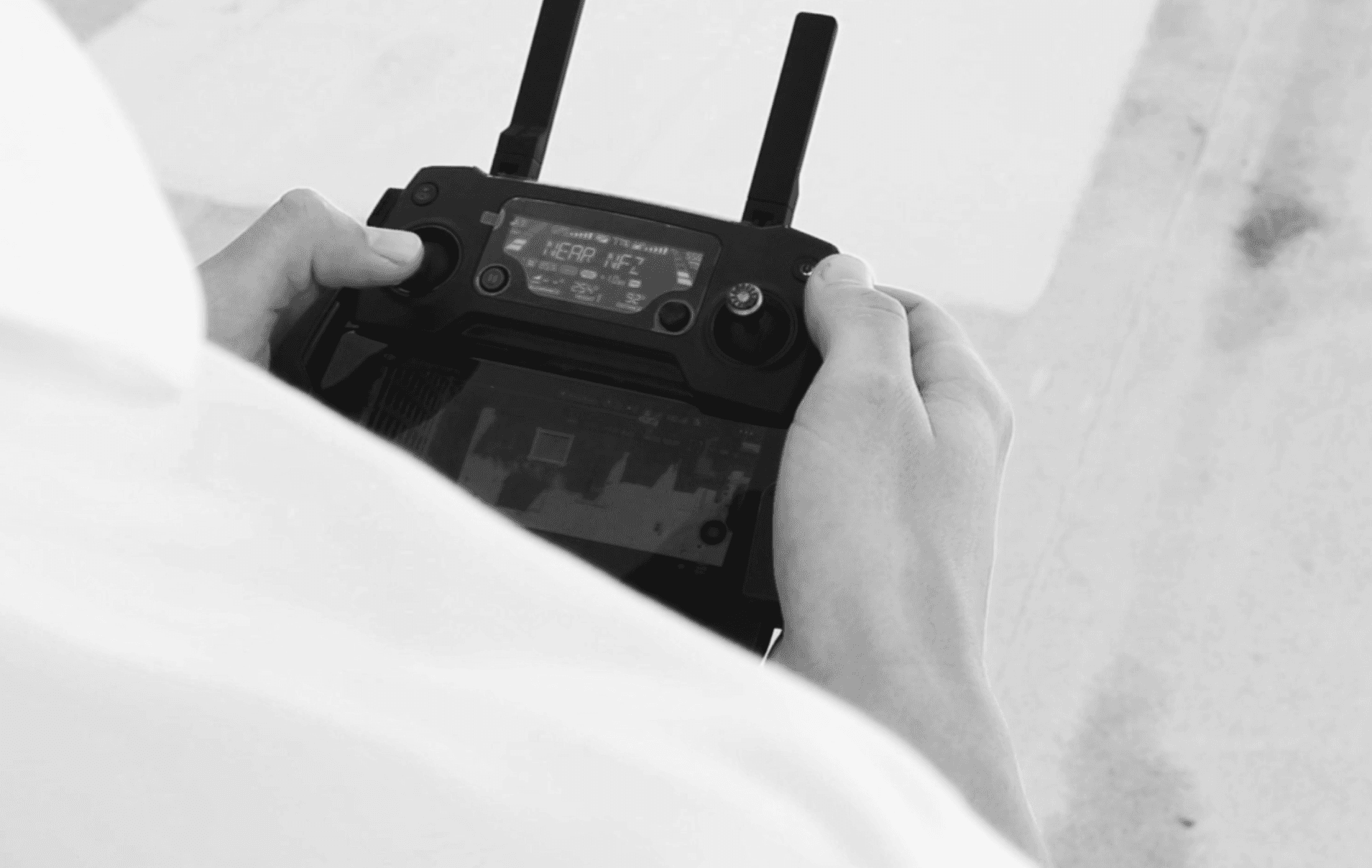
High-resolution aerial imagery supports site analysis, massing studies, and coordination with consultants and agencies. Accurate topography, roof conditions, and site features can be evaluated early, reducing assumptions and improving alignment across disciplines.
Aerial documentation is particularly valuable for transit-adjacent sites, adaptive reuse contexts, and projects with complex access or environmental constraints.
Communication and Documentation
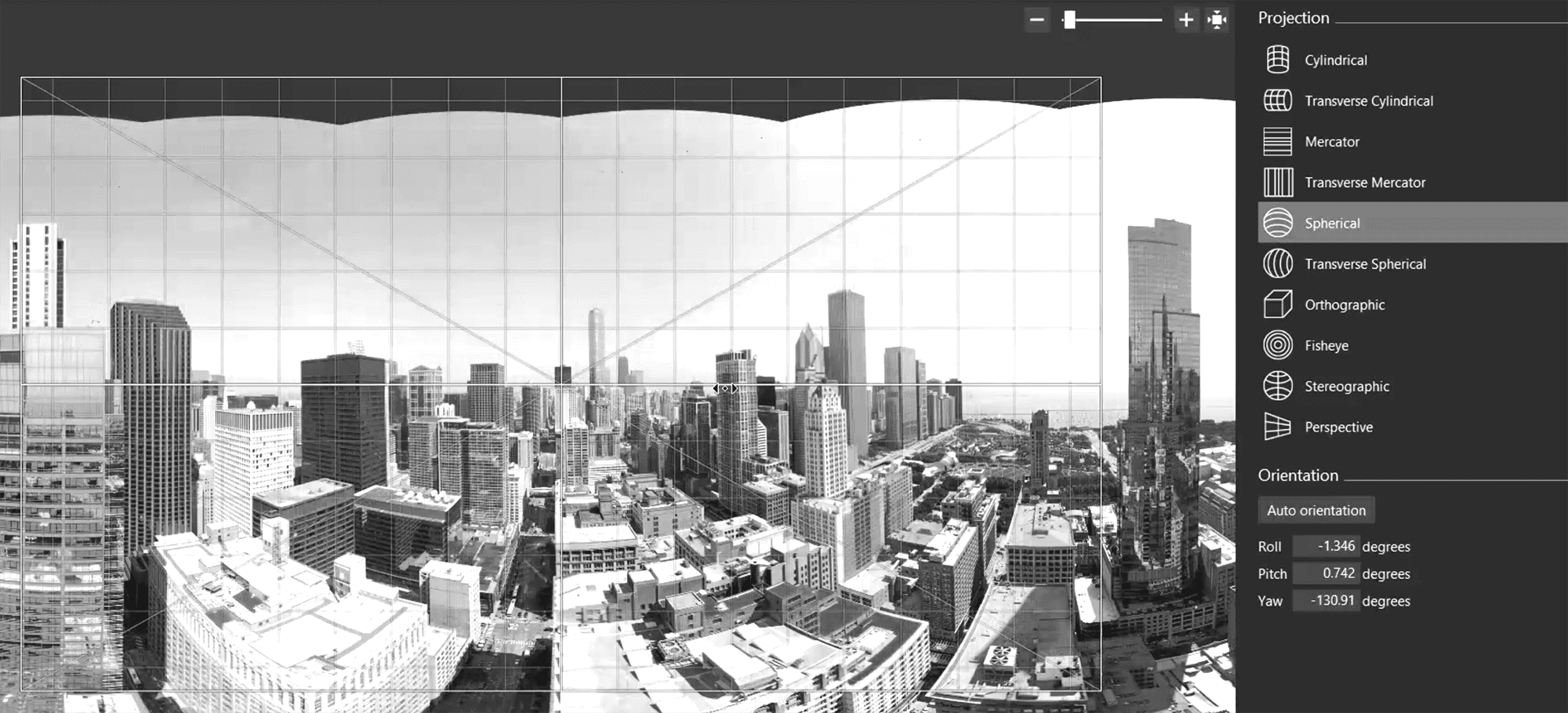
UAV imagery supports clear communication with clients, public agencies, and community stakeholders by making site conditions legible and transparent. These visuals help ground discussions in real conditions and support more informed feedback and decision-making.
Aerial documentation can also serve as a baseline record of existing conditions, supporting phasing, construction coordination, and long-term stewardship.

Final Thought
UAV and aerial documentation strengthen architectural work by improving how sites are understood before design decisions are finalized. By integrating aerial intelligence into the design process, OAO reduces uncertainty, supports better coordination, and delivers projects that respond more accurately to their context.

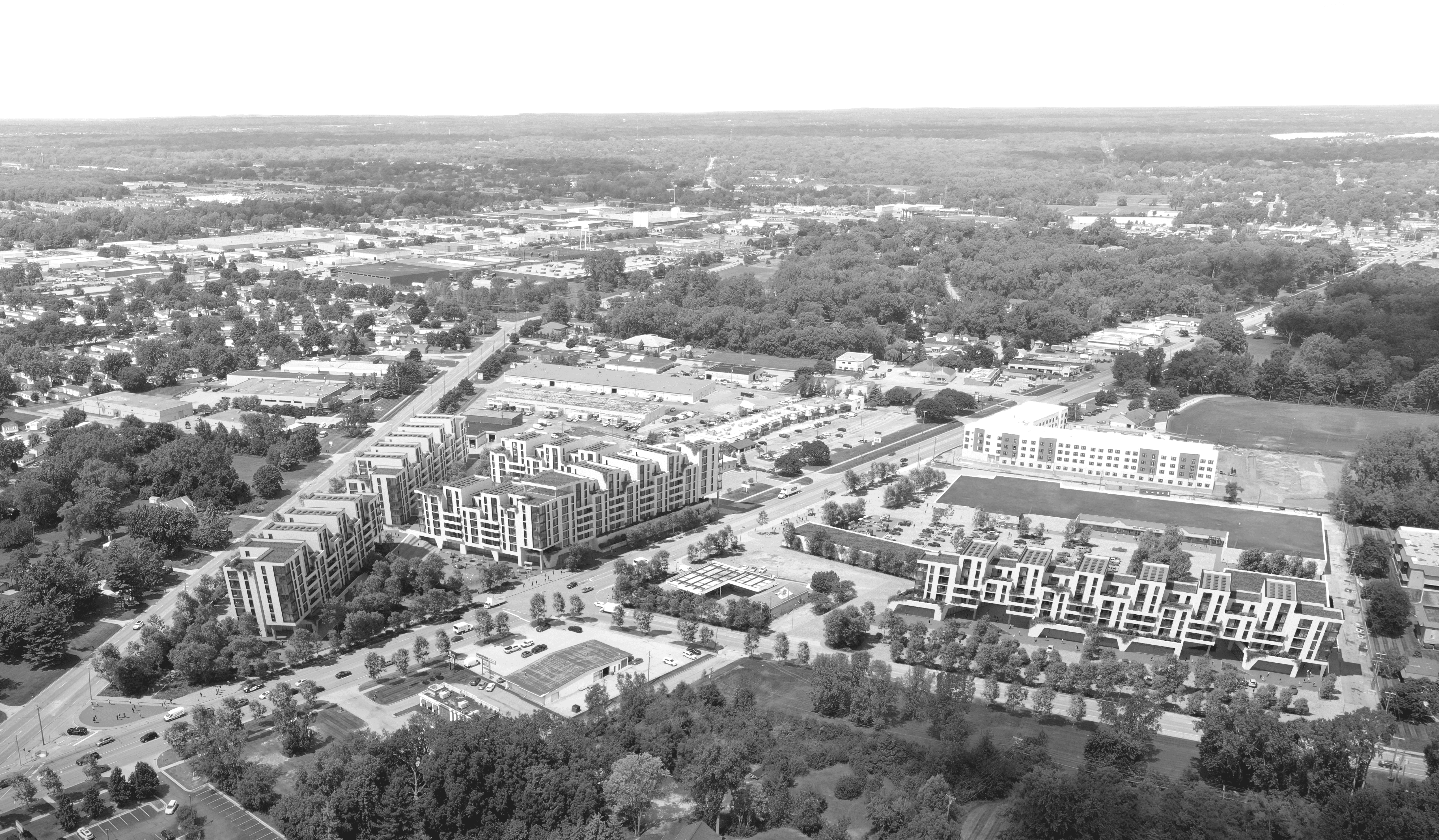
Aerial documentation informs neighborhood-scale urban design frameworks, supporting early planning decisions.

Let’s keep in touch.
Discover more about high-performance web design. Follow us on Twitter and Instagram.