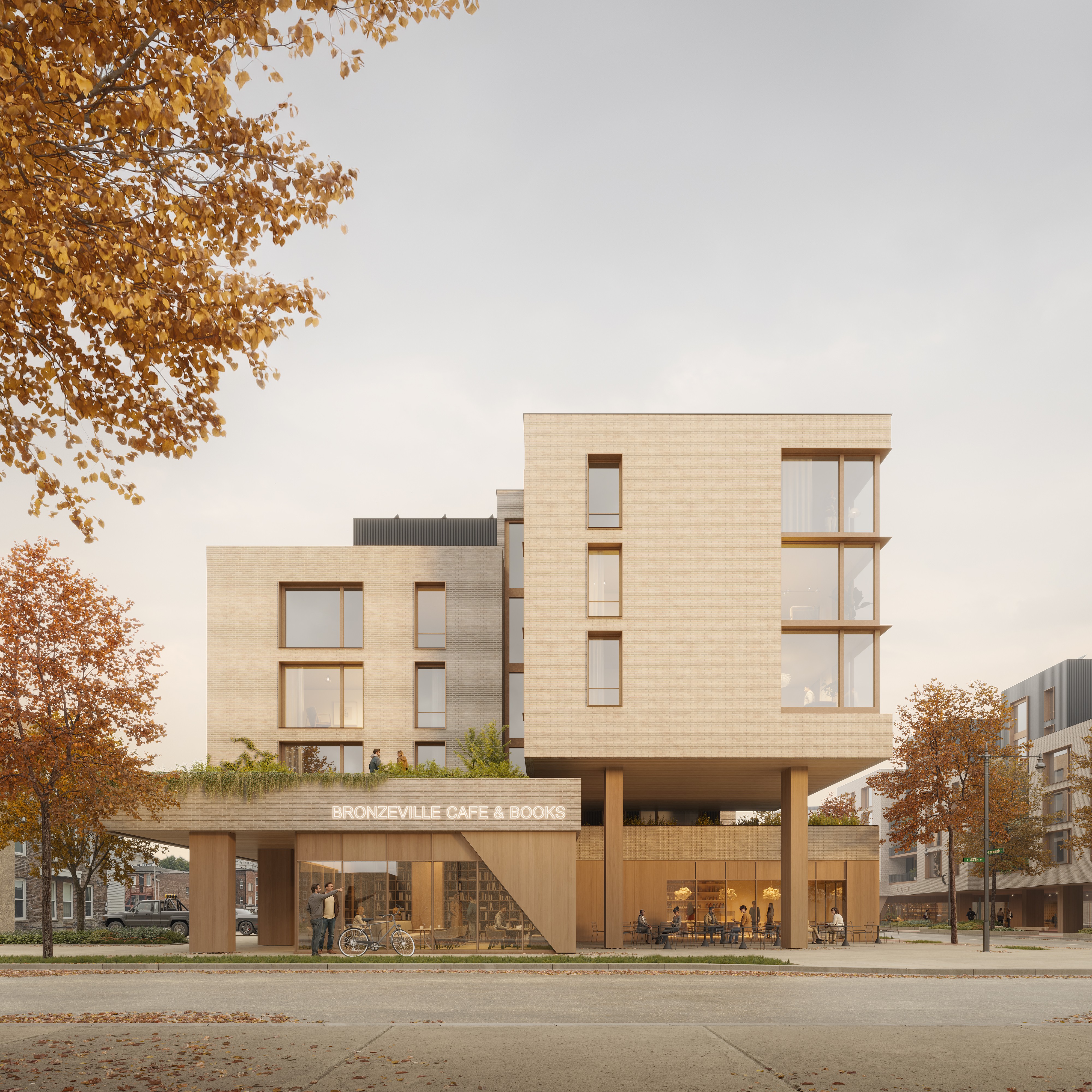
Bronzeville Forward
A Framework for Missing Middle Housing and Neighborhood Renewal
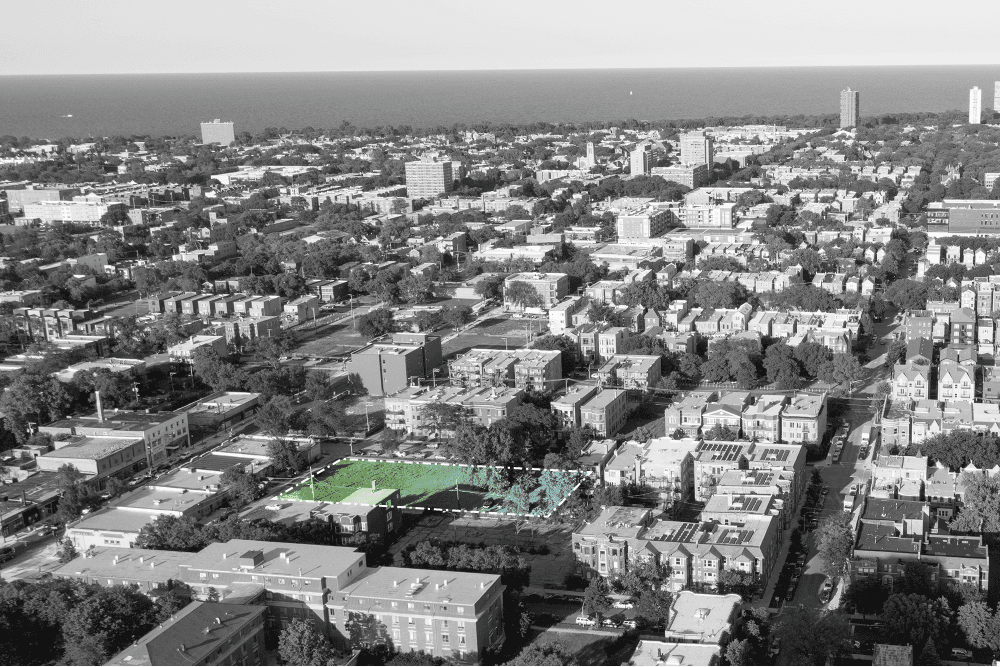
Bronzeville’s residential blocks are defined by walkability, strong street presence, and a legacy of human-scaled housing. Decades of disinvestment have left gaps in this fabric, often in the form of vacant lots and fragmented parcels that weaken block continuity.
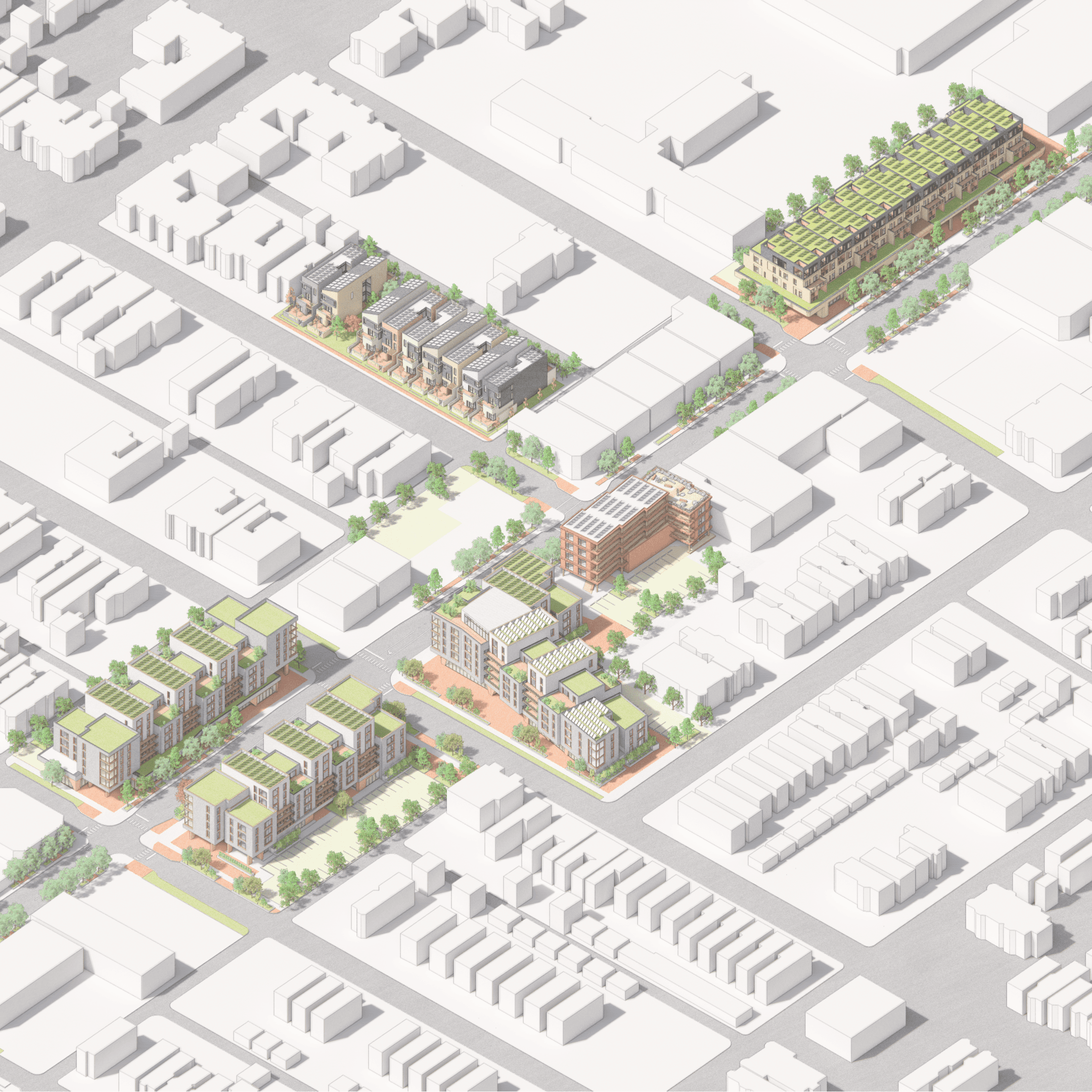
Rather than viewing these sites as isolated opportunities, Bronzeville Forward approaches them as part of a larger neighborhood system. Each infill location is evaluated in relation to adjacent buildings, streets, and public space so new housing strengthens cohesion and reinforces Bronzeville’s identity as a connected and livable community.
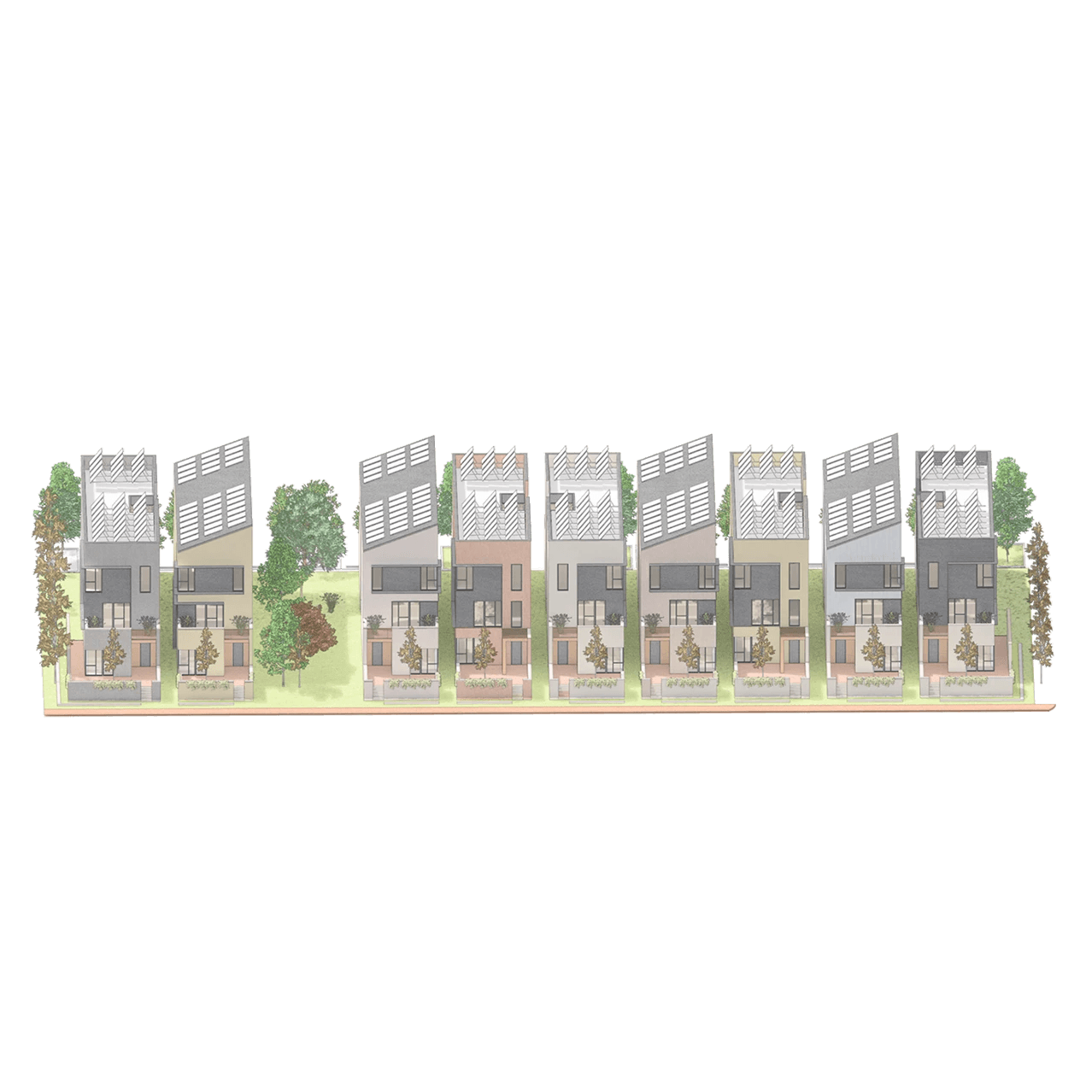
This initiative is not a single project but a repeatable framework. It establishes a clear design and development approach that can be applied across multiple sites while remaining responsive to local conditions.
The framework prioritizes neighborhood scale, long-term livability, and adaptability. By aligning design principles with zoning realities and construction feasibility, individual projects can advance independently while contributing to a coherent neighborhood vision.
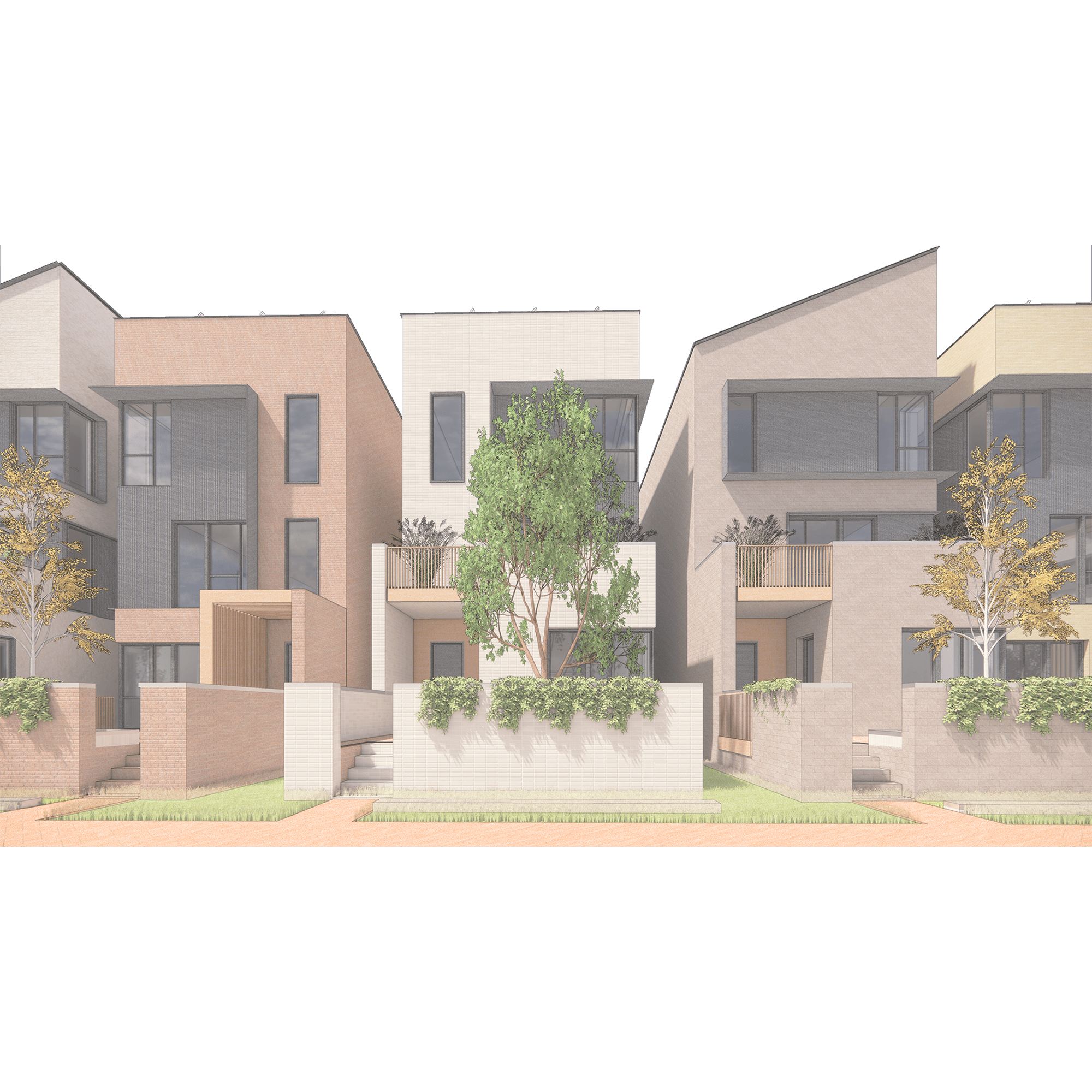
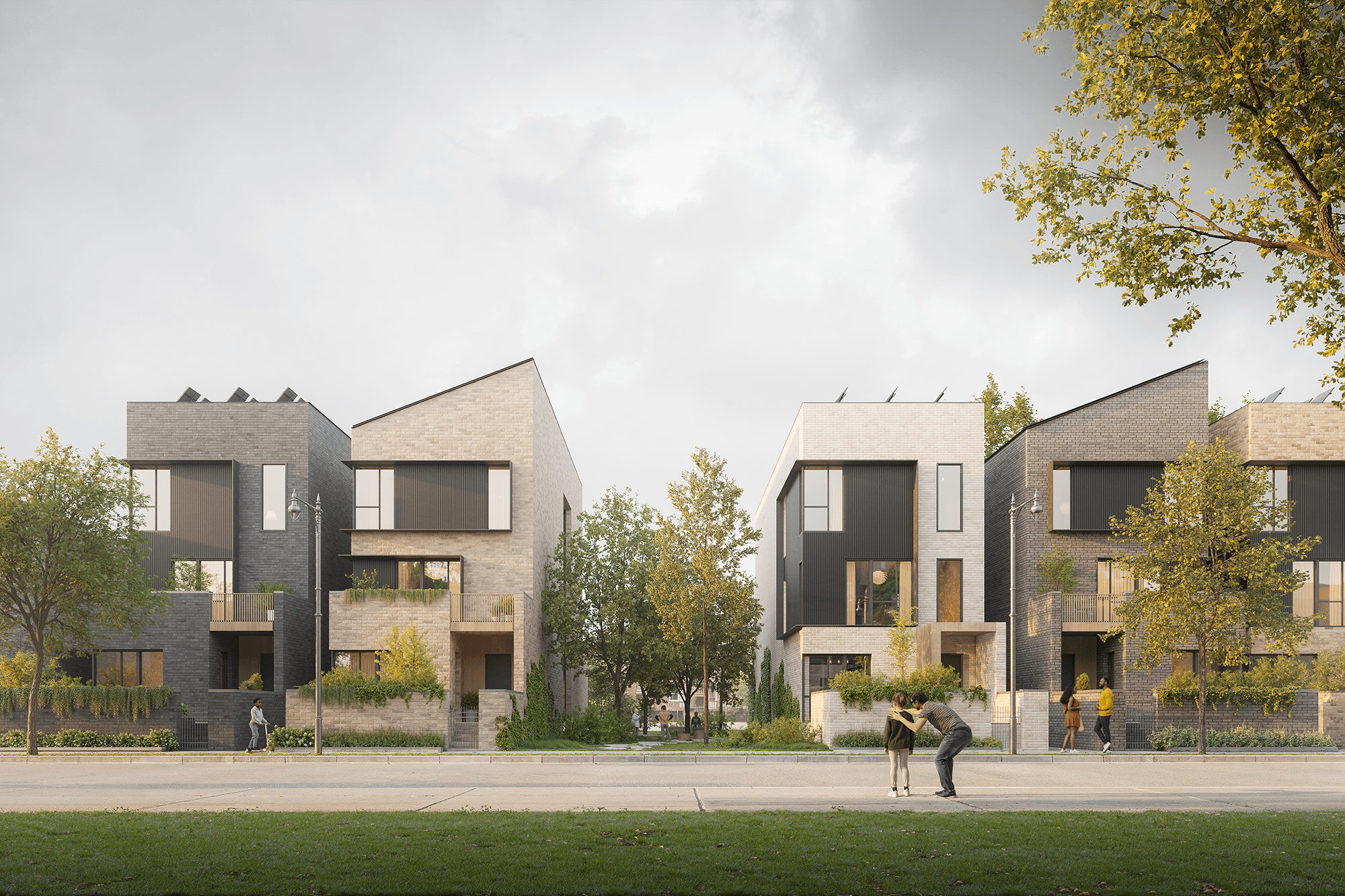
Bronzeville Forward introduces a family of low-rise residential typologies, typically two to three stories, designed to adapt over time.
Buildings can function as single-family homes, two-flats, or hybrid configurations that include rental units, in-law suites, or live-work spaces. This flexibility supports multigenerational living, supplemental income, and evolving household needs while maintaining dignity, efficiency, and spatial quality.
Community engagement is integral to the initiative. Design decisions were informed through collaboration with neighborhood stakeholders to reflect local priorities and lived experience.
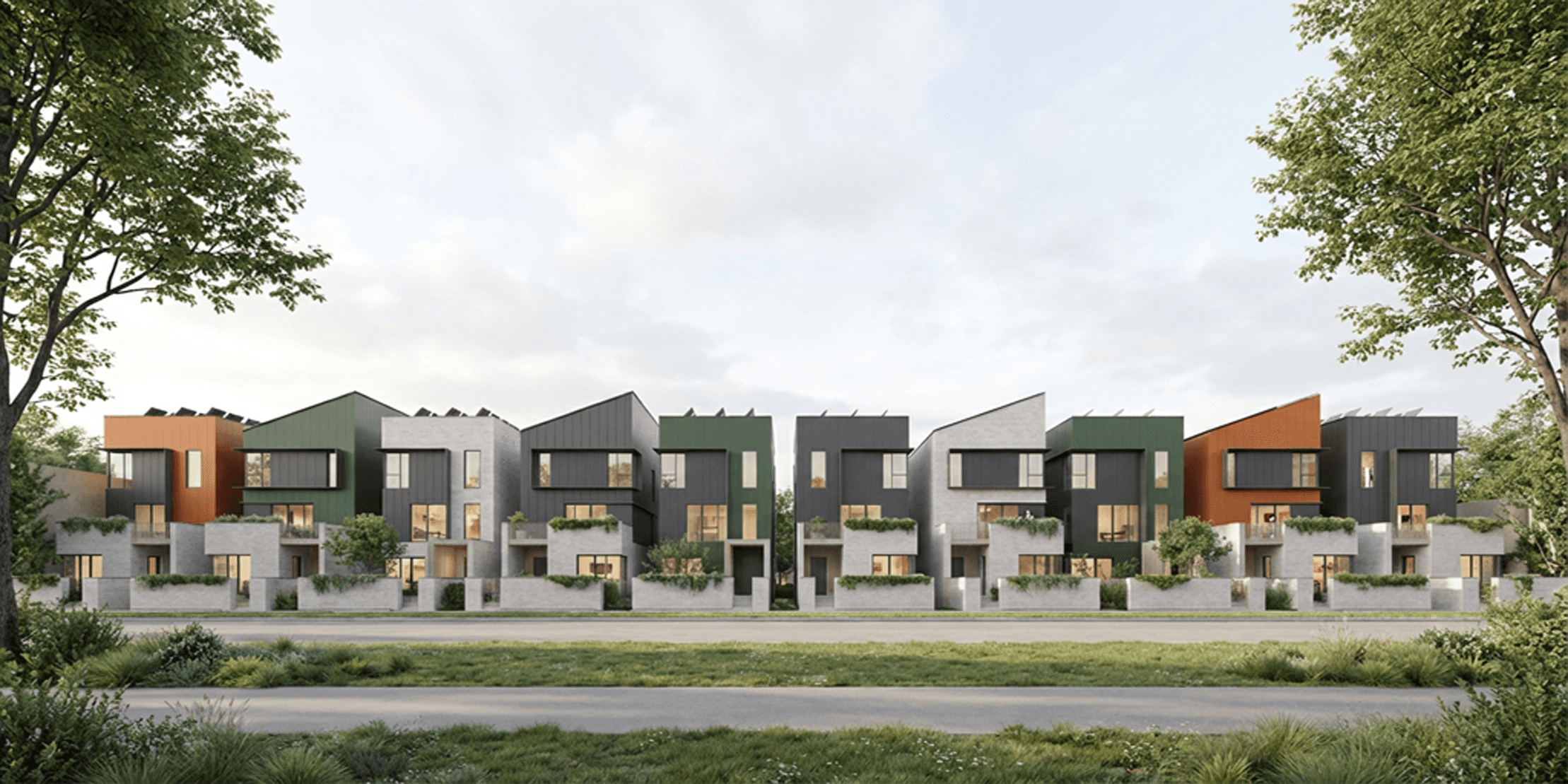
Architectural cues draw from Bronzeville’s vernacular, including familiar proportions, pitched roofs, articulated facades, and durable masonry materials. New construction feels contemporary yet recognizable, reinforcing continuity rather than visual disruption.
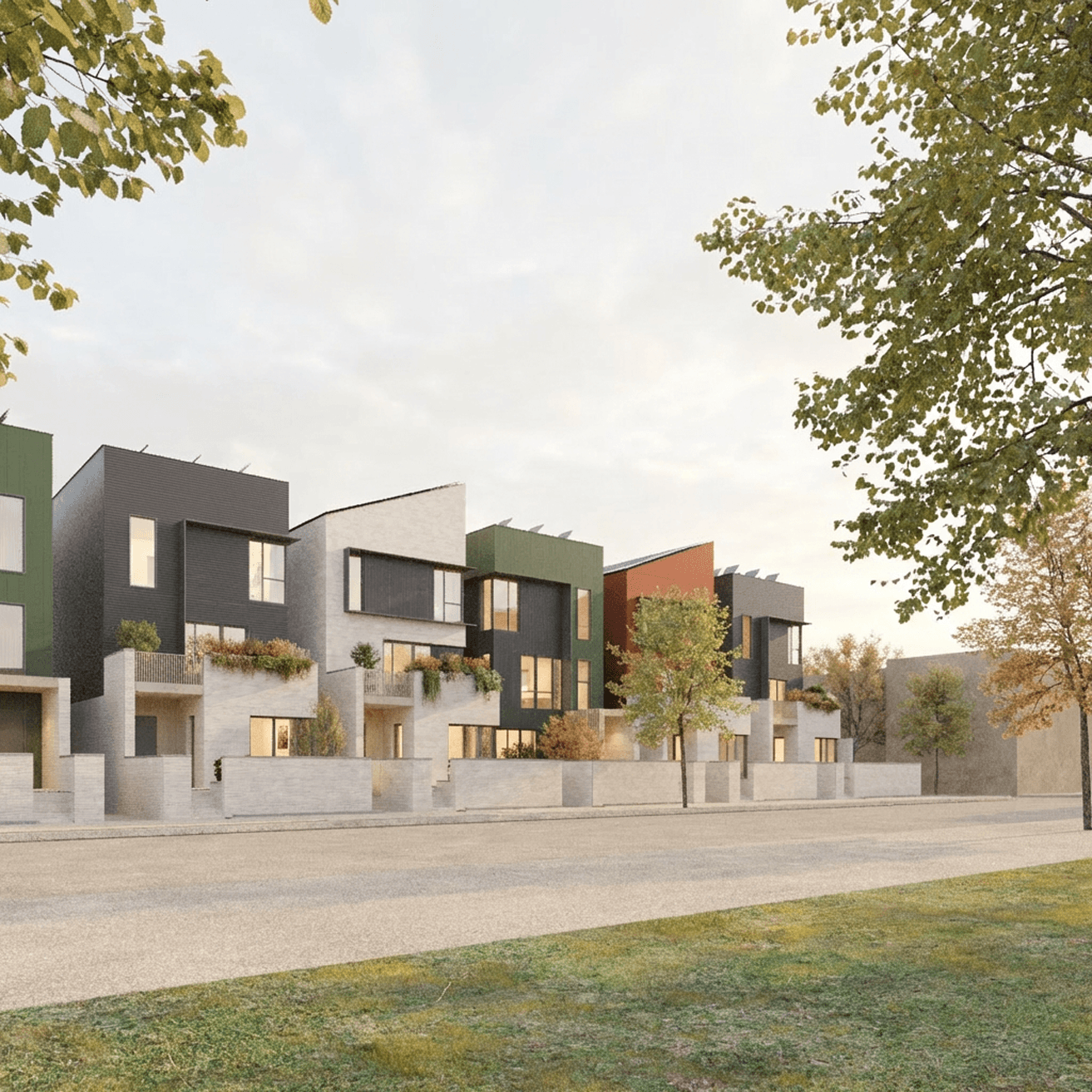
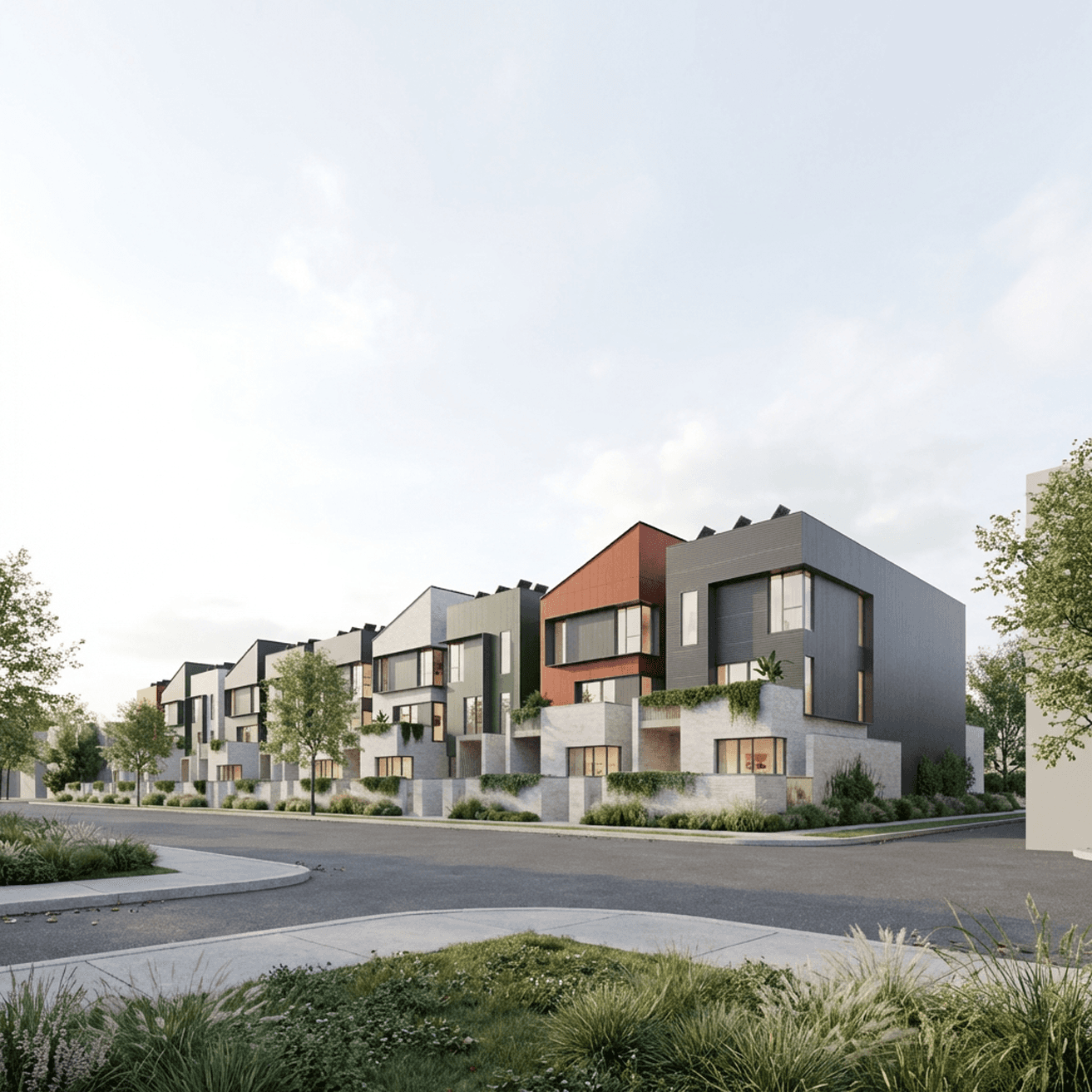
The framework extends beyond individual buildings to strengthen the public realm and everyday social life.
Landscaped setbacks, front porches, stoops, shared courtyards, and pedestrian-oriented layouts reinforce street presence and informal interaction. These elements support safety, walkability, and a gradual transition between private homes and public space.
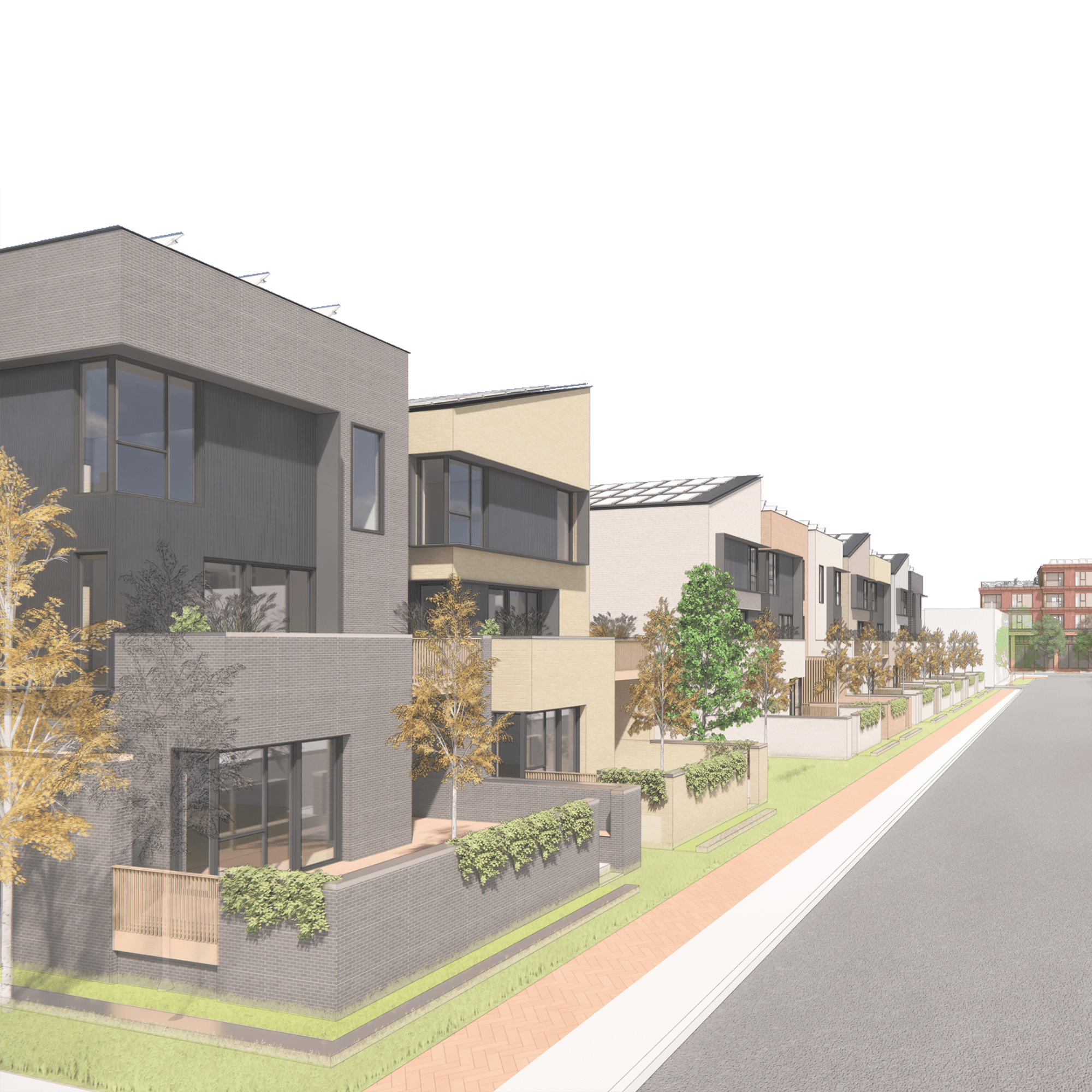
OAO provided leadership across visioning, coordination, and site-specific strategy, guiding the initiative from early planning through phased implementation.
A phased approach allows early projects to move forward while establishing a foundation for long-term impact. By aligning zoning, sustainability, and financial feasibility, each phase remains achievable and scalable.
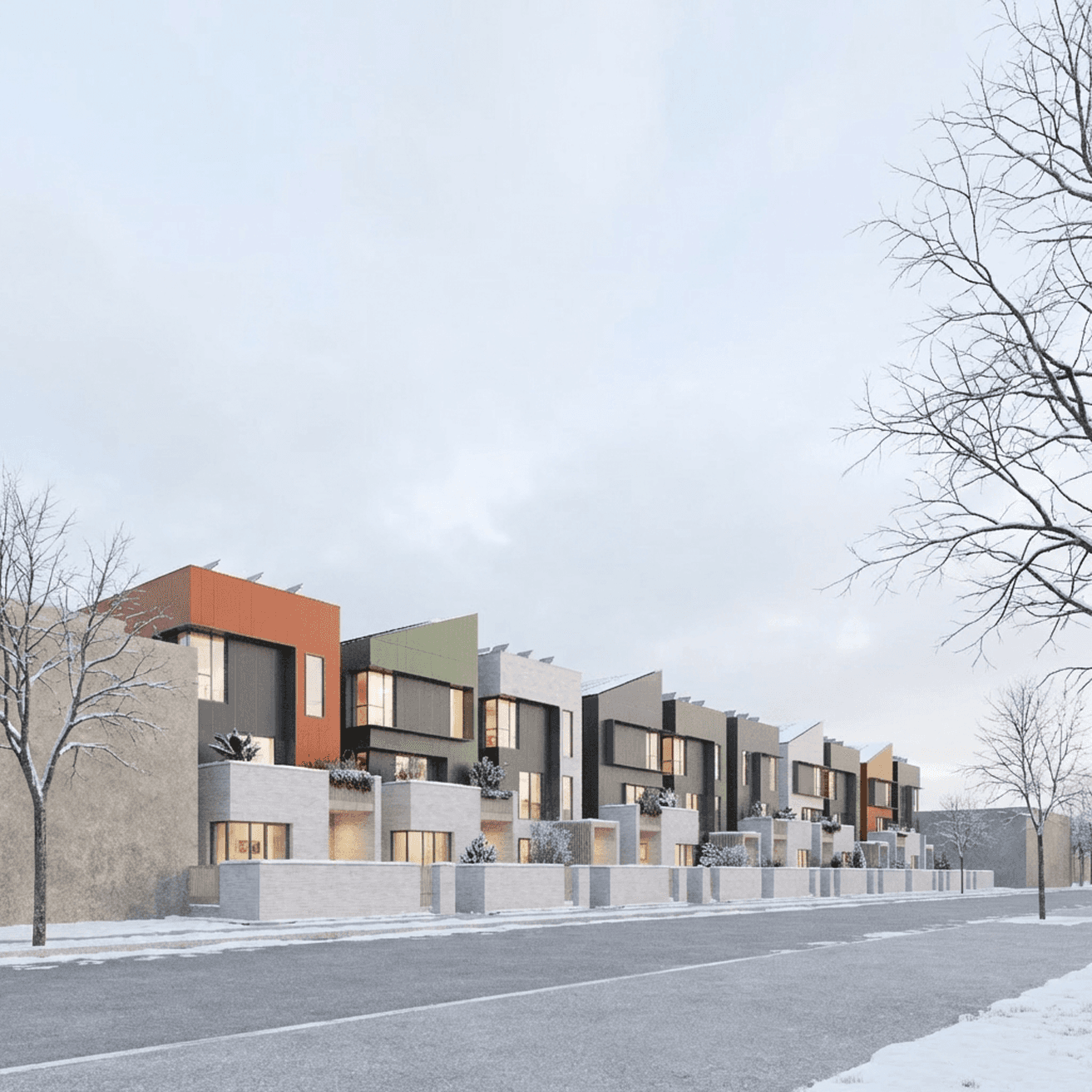
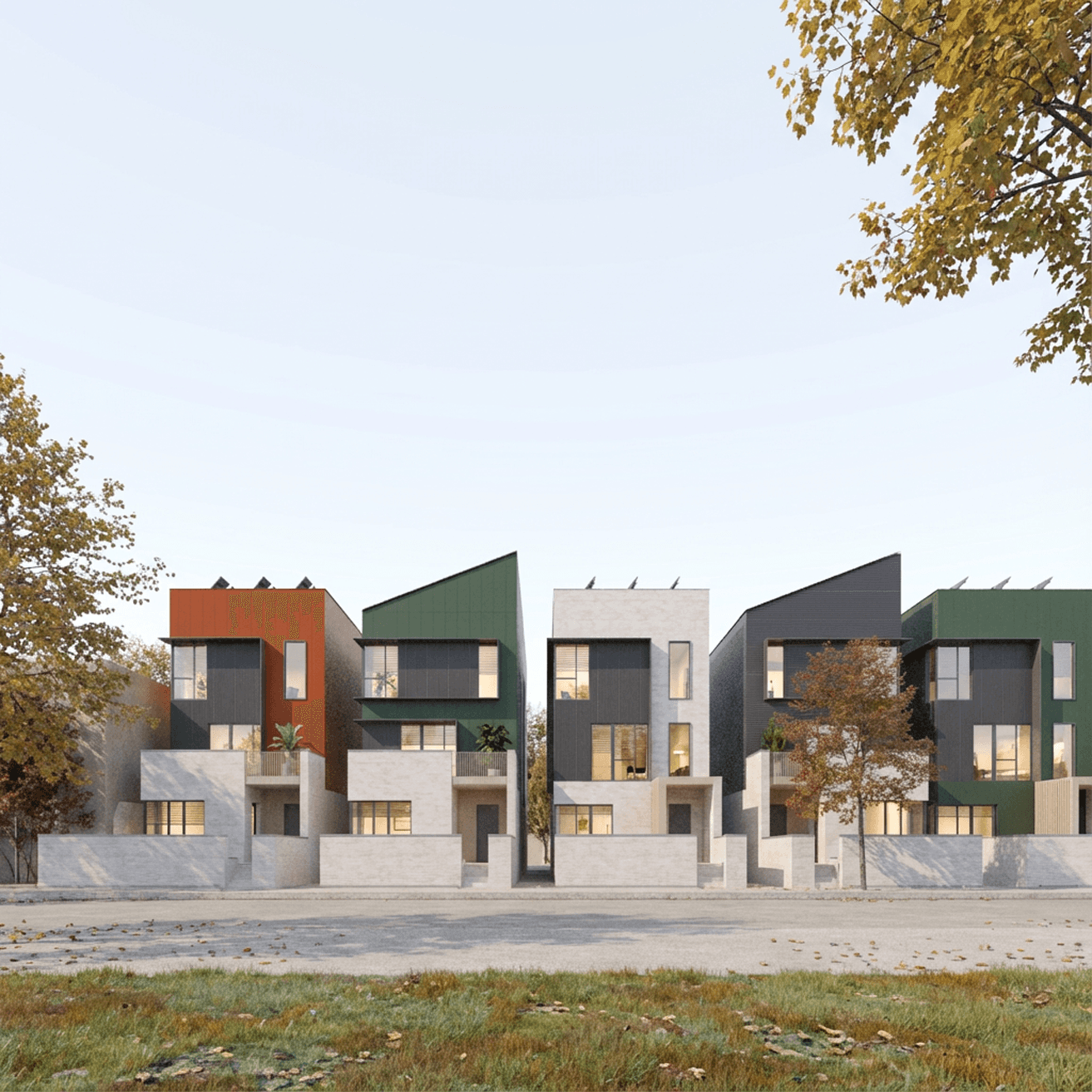
Bronzeville Forward is conceived as a contributor to daily public life, not solely as a housing delivery mechanism.
Front doors, porches, and landscaped thresholds reinforce the street as a shared civic space. Small greens, widened sidewalks, and connected courtyards link individual buildings into a cohesive block environment, supporting social connection, oversight, and long-term neighborhood resilience.
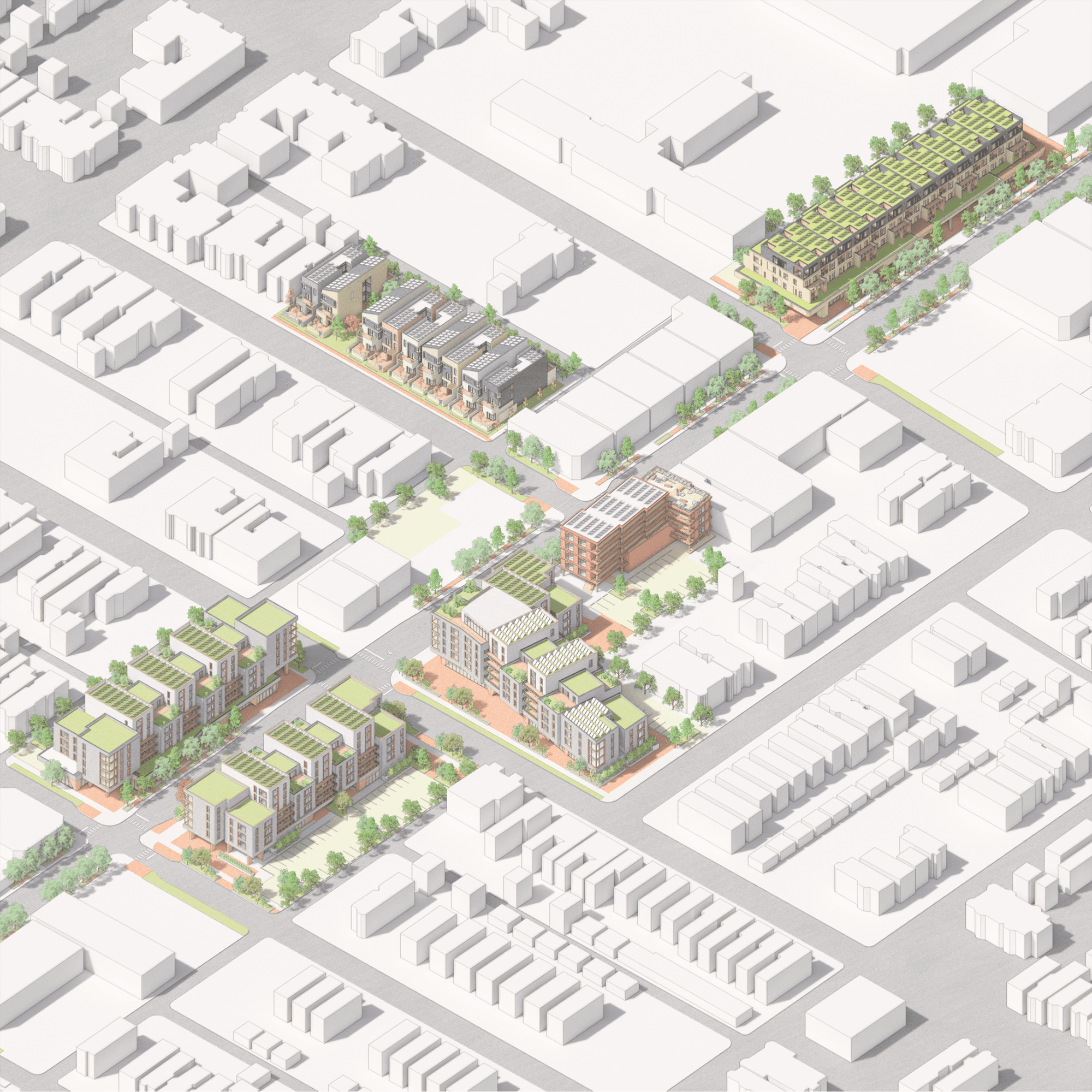
Bronzeville Forward demonstrates that modest, well-considered architecture can have an outsized neighborhood impact.
By prioritizing permanence, adaptability, and human experience over scale, the initiative offers a forward-looking model for urban housing that preserves the character of Bronzeville while expanding opportunity for future generations.
Related Research.
This project is informed by applied research in transit-oriented development, supporting housing density near transit while maintaining neighborhood continuity.

Next projects.
(2016-25©)