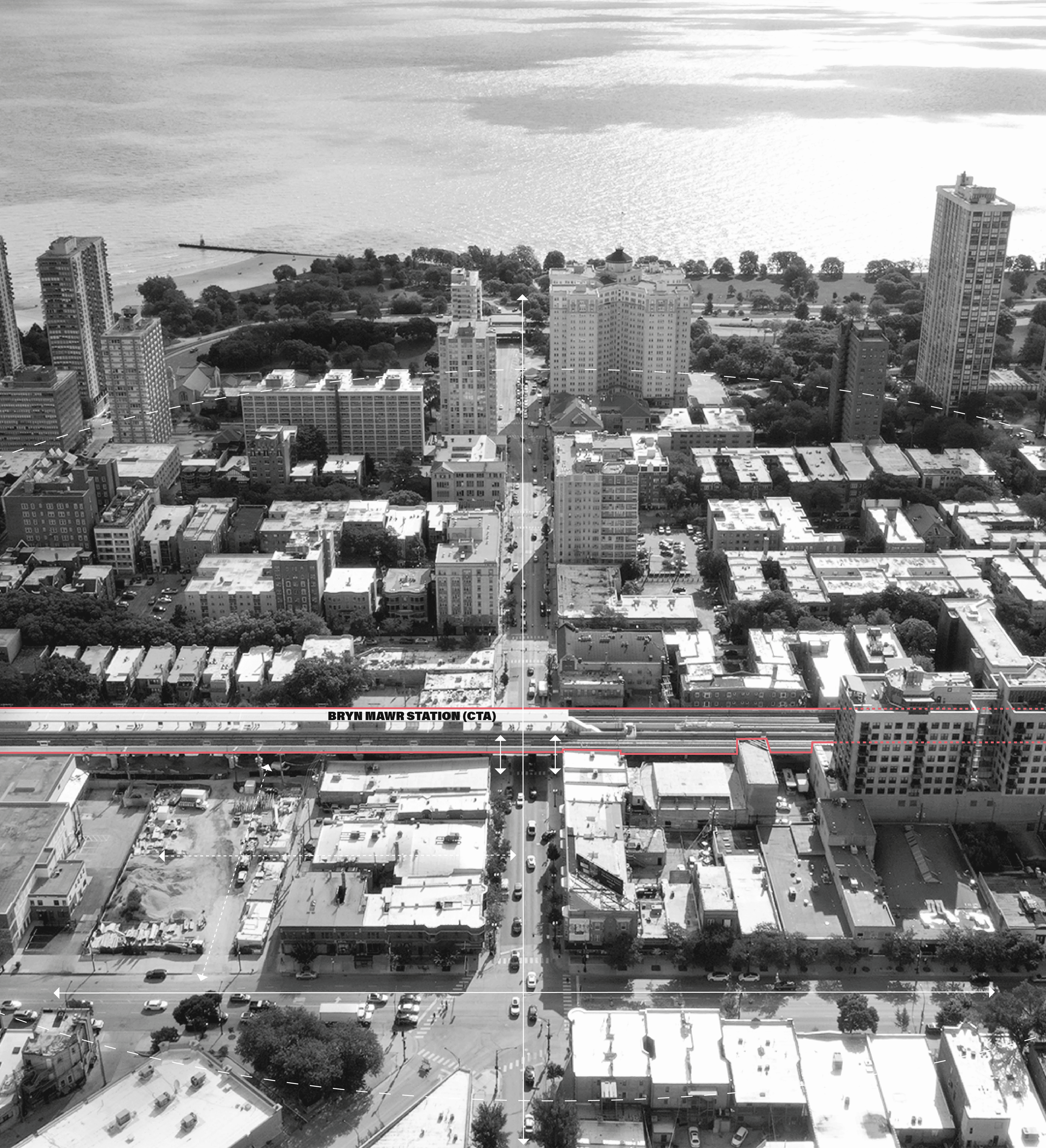

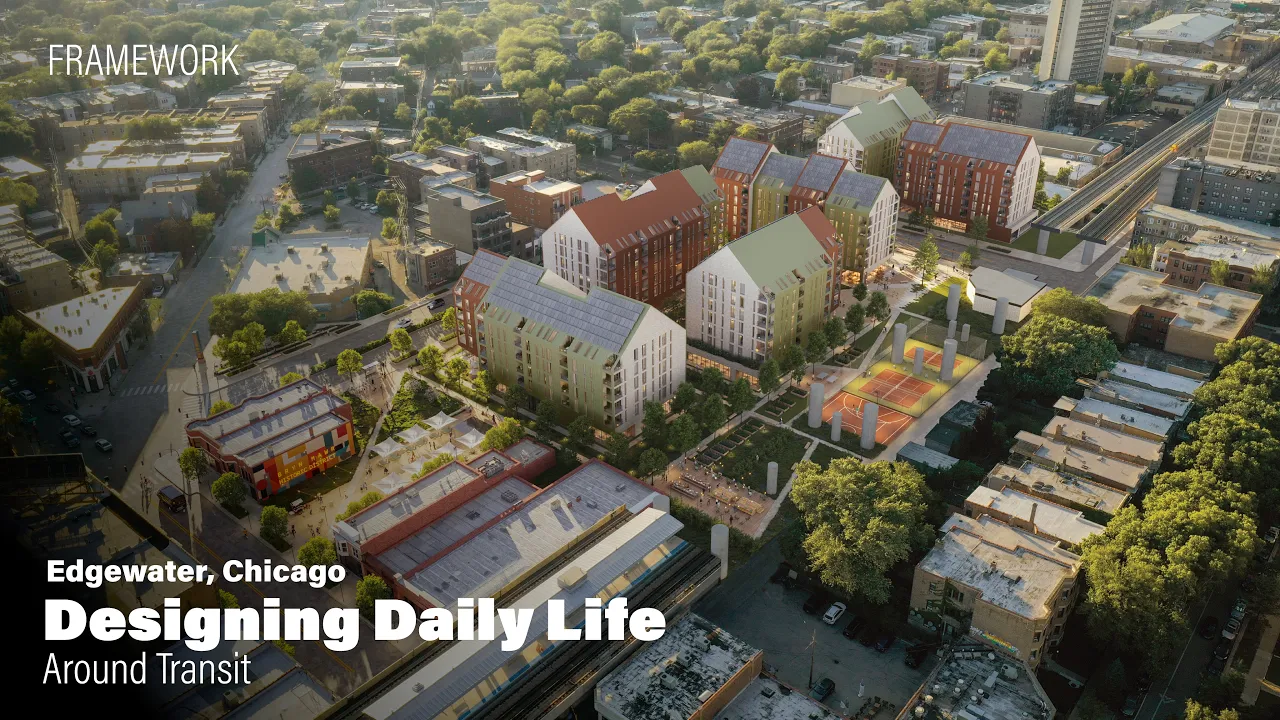
Edgewater is not presented as a master plan, but as a framework. The film explores how infrastructure, residential density, circulation, and public realm can be aligned when approached as a single system rather than isolated interventions.
Why Edgewater Matters
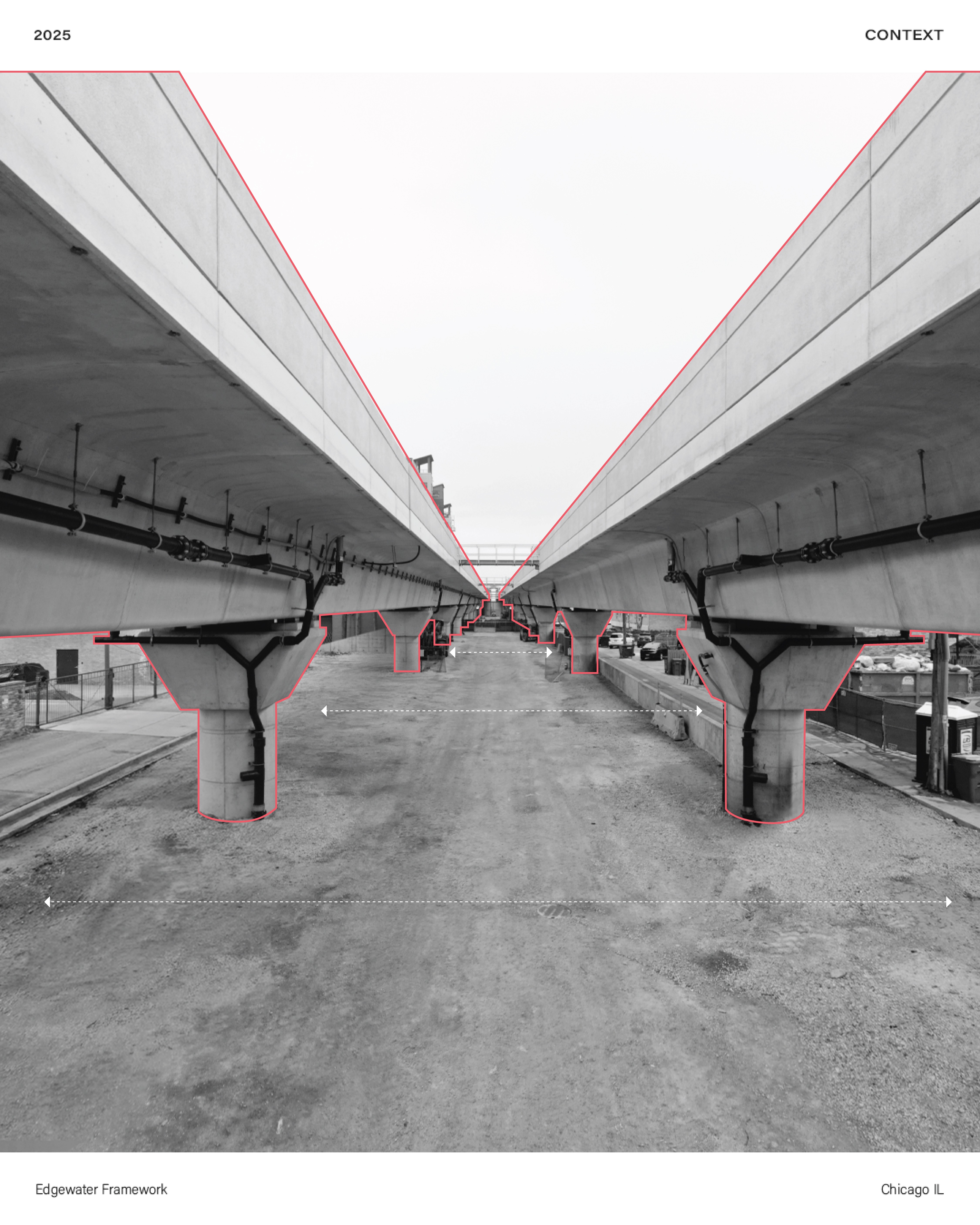
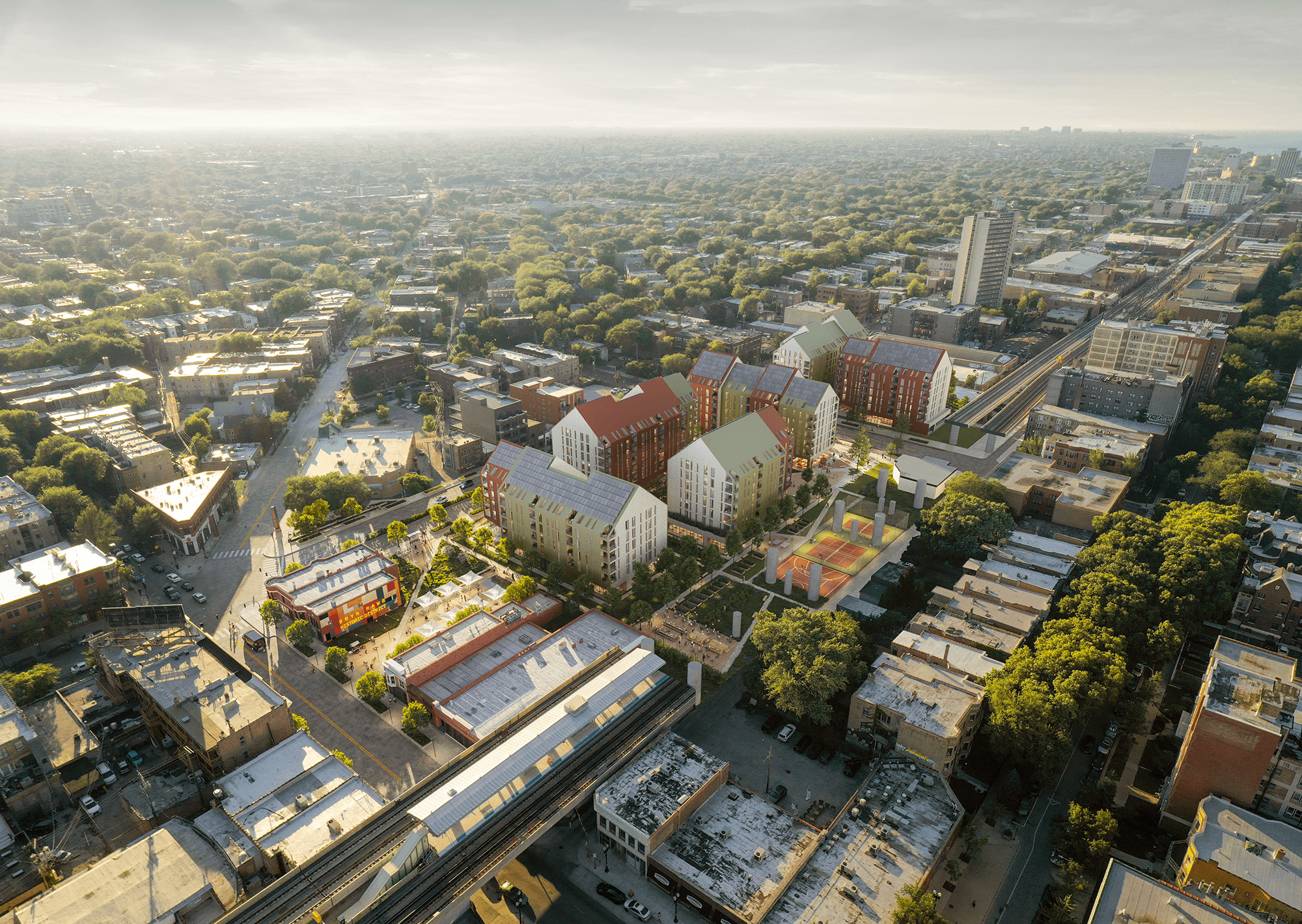
Chicago’s elevated rail system has always structured more than movement. It defines edges, light, access, and the rhythm of adjacent blocks. In Edgewater, modernization introduces wider spans and greater continuity beneath the tracks. These physical changes create a rare opportunity to reconsider how housing and civic space relate directly to transit.
The film positions this condition not as background context, but as a design catalyst.
A Framework for Coordinated Growth
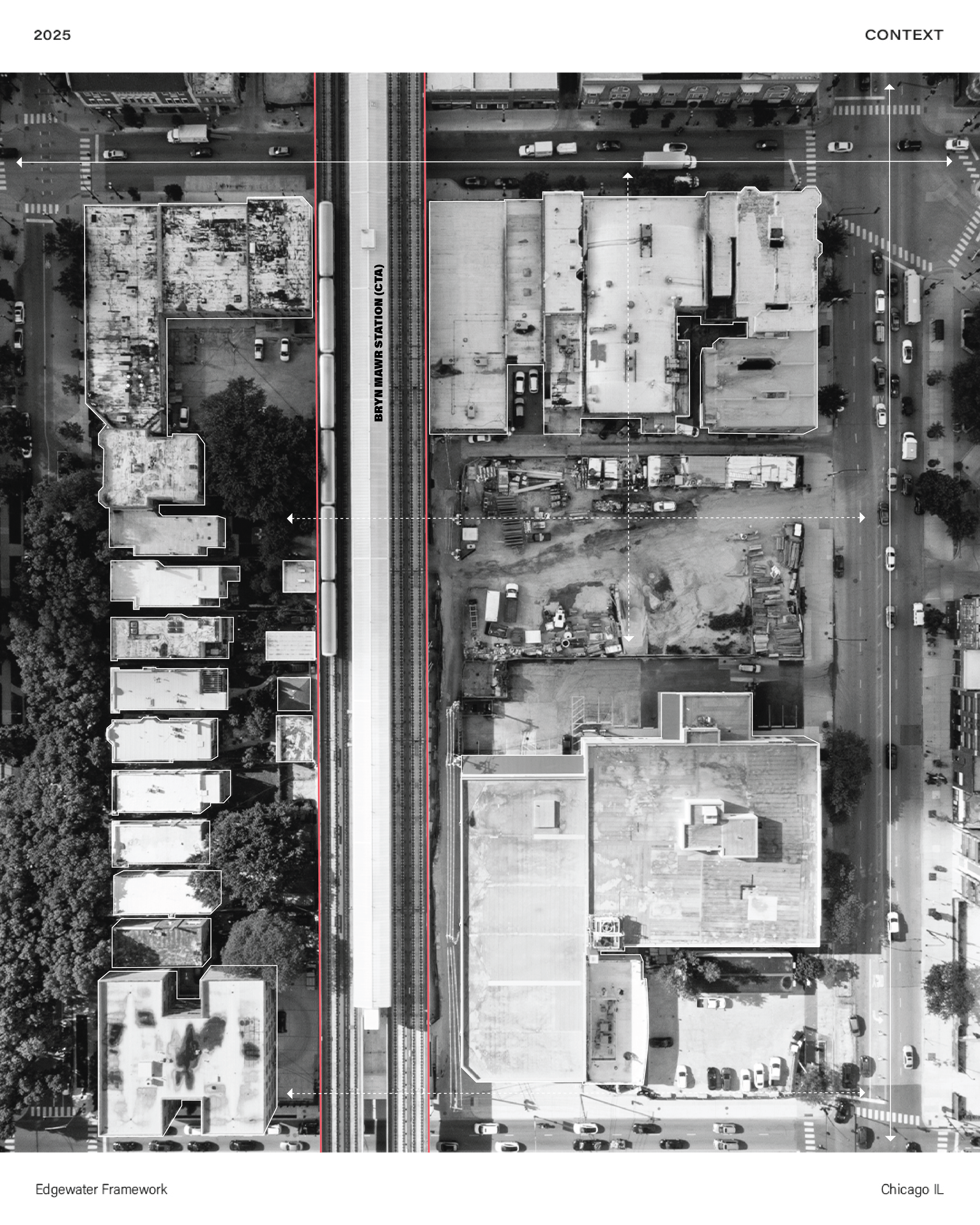
The Edgewater study tests how public space, residential buildings, and movement systems can operate together.
Public Realm New open space beneath and adjacent to the structure establishes continuity and civic presence at ground level.
Residential Density Housing is calibrated to reinforce transit access while respecting neighborhood scale and light conditions.
Circulation and Access Pedestrian and vehicular systems are aligned with the structural rhythm of the tracks to strengthen coherence rather than fragmentation.
Phasing and Implementation The framework considers how transformation can occur incrementally while maintaining operational transit and neighborhood stability.
Advanced Visualization and Film Production
The project is communicated through a short film that integrates aerial documentation, plan diagrams, sectional studies, and final renderings. By combining research, design rigor, and visual storytelling, the film makes spatial strategy accessible to a broader audience.
Rather than summarizing a project, the film extends the conversation about how cities evolve when infrastructure and architecture move together.
From Infrastructure to Daily Life
At its core, the Edgewater Framework asks how large scale systems can support human experience. Transit structure, residential form, and open space are shaped to function as a unified environment measured in light, proportion, and movement.
The film represents Open Architecture Office’s commitment to open dialogue. It captures not only a proposal, but a broader inquiry into how Chicago can grow with discipline, clarity, and civic responsibility.
A Platform for Ongoing Conversation
The Edgewater Framework Film is the first release within OAO’s film series. Future films will continue to document projects, research, and civic initiatives that shape the built environment, reinforcing the practice’s open and collaborative approach to city making.
Ending
Edgewater is not presented as a finished answer. It is a proposition about how Chicago can grow with greater coordination between infrastructure investment and architectural responsibility.
By aligning structure, housing, and public space at the outset, the framework demonstrates how long term performance can be embedded in the earliest decisions.
Final Thought
Cities evolve whether intentionally guided or not. The question is whether growth is shaped by discipline and clarity, or by fragmentation and short term reaction.
The Edgewater Framework Film invites a broader conversation about designing infrastructure and architecture as a unified civic act.
Related Work and Ongoing Research
The film features and builds upon two parallel bodies of work:
Edgewater Framework
Edgewater Framework establishes the broader urban logic for coordinated growth along the transit corridor. It tests how structure, public realm, housing density, and circulation can align as a unified system.
Edgewater Crossings
Edgewater Crossings advances this thinking at the scale of architectural intervention, exploring how residential buildings and ground level activation can integrate directly with elevated infrastructure while reinforcing neighborhood continuity.
Transit-Oriented Development
These projects are supported by OAO’s ongoing research into Transit Oriented Development. This research examines policy, phasing, typology, and performance across Chicago neighborhoods where infrastructure investment creates opportunity for responsible density.
Together, project work and research form a continuous inquiry into how cities can evolve through disciplined coordination between transit, housing, and civic space.
Let’s keep in touch.
Discover more about high-performance web design. Follow us on Twitter and Instagram.