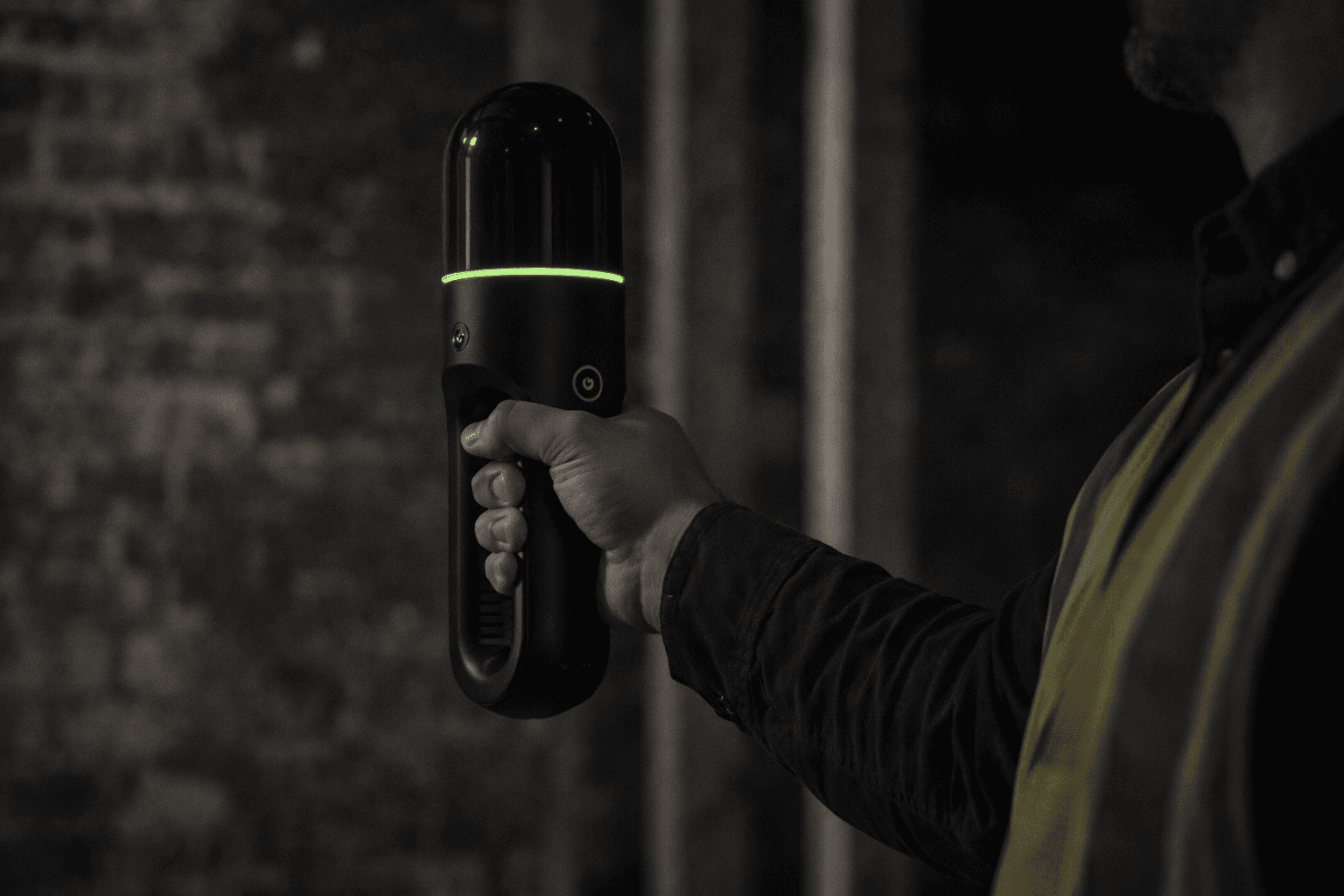

At Open Architecture Office, laser scanning transforms real-world conditions into actionable design intelligence.
Designing from Real Conditions
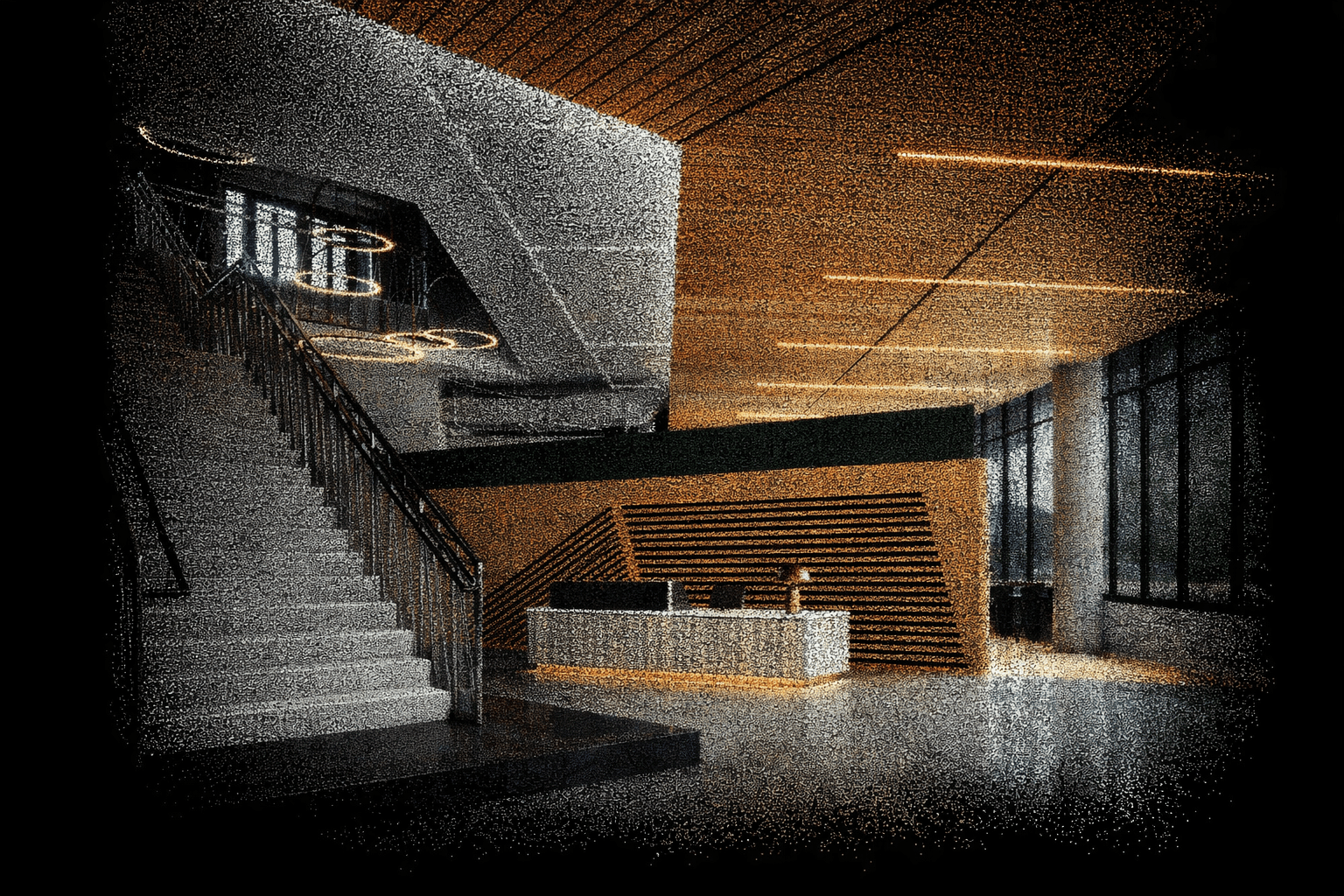
Laser scanning is a core component of OAO’s research and development practice. It allows projects to begin with precise, real-world spatial data rather than assumptions or incomplete documentation. By capturing existing conditions accurately from the outset, laser scanning strengthens decision-making across planning, design, coordination, and delivery.
Integrated directly into our design workflow, high-resolution spatial capture reduces uncertainty, accelerates alignment among stakeholders, and improves architectural outcomes across residential, mixed-use, and civic projects.
Why Laser Scanning Matters
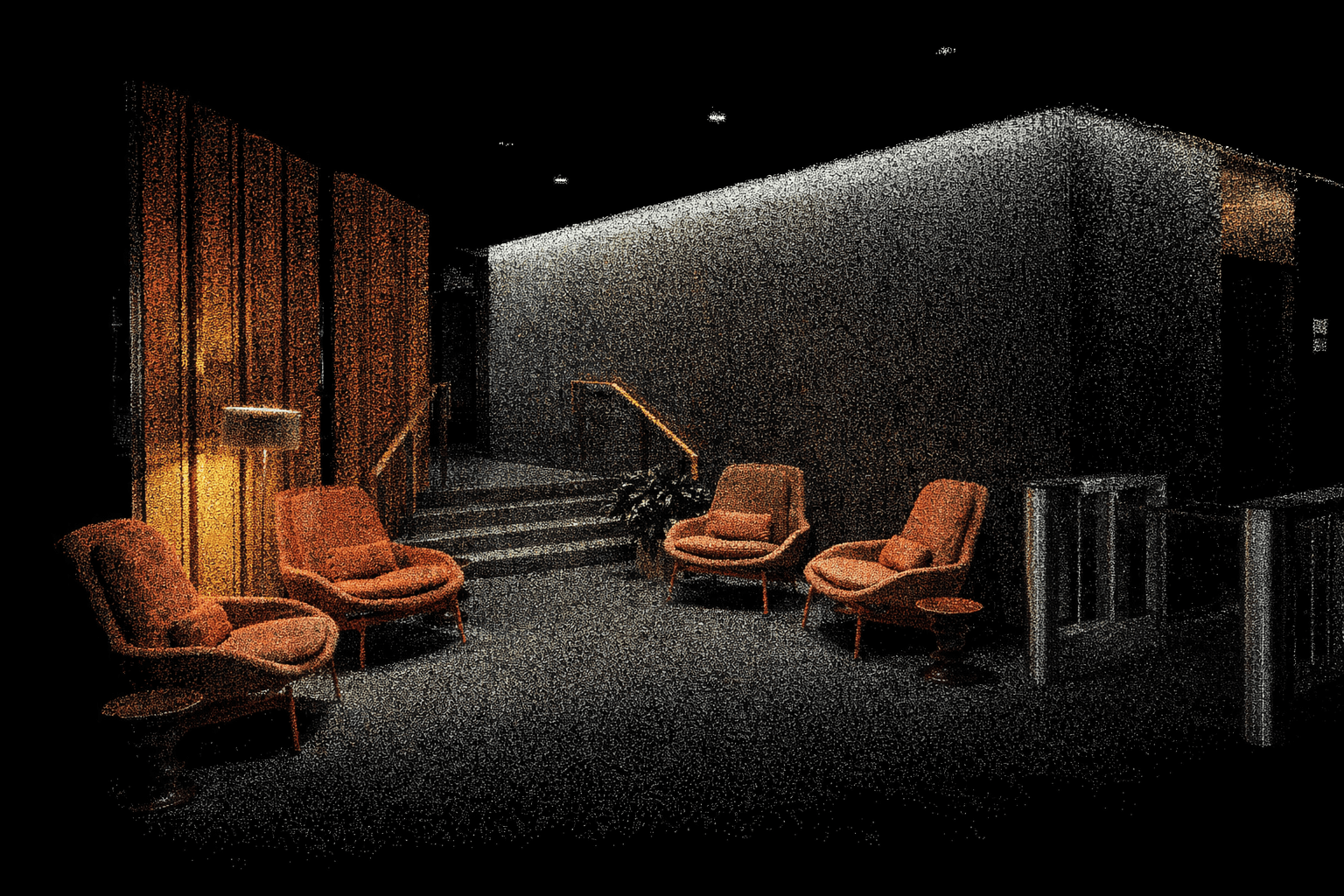
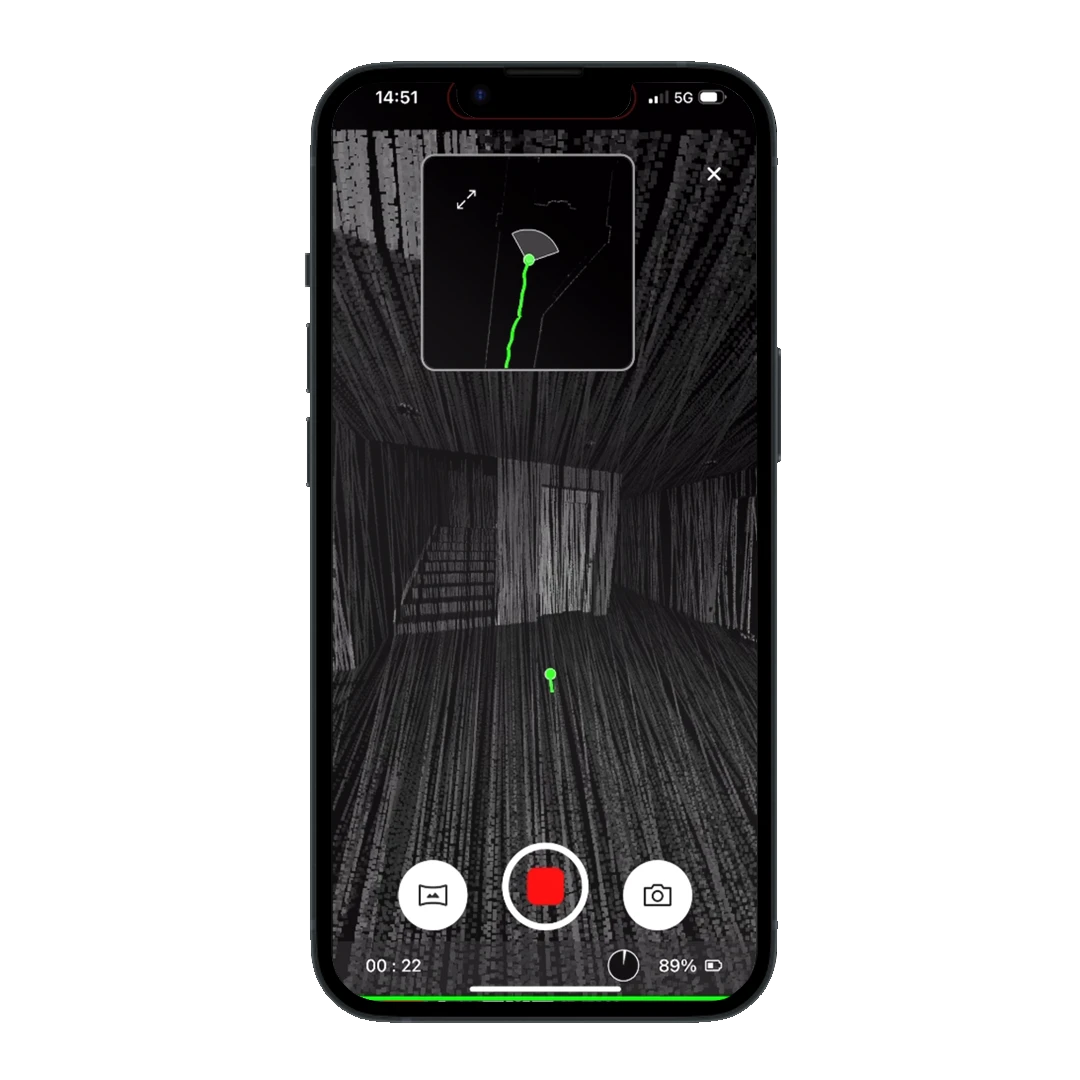
Traditional documentation methods often rely on partial drawings, outdated surveys, or field measurements taken too late to meaningfully inform design. Laser scanning replaces approximation with clarity. Millions of data points capture geometry, structure, and context as they exist, creating a shared and reliable foundation for design and coordination.
For OAO, this data becomes design intelligence. It supports more confident decisions, reduces downstream risk, and improves collaboration across disciplines.
Integrated into Our Design Process
Laser scanning is embedded early in our workflow and informs decisions across every phase of a project.
Early Feasibility and Planning
Accurate existing conditions support zoning analysis, massing studies, and site strategy without guesswork. Early access to precise geometry enables faster testing of options and more productive conversations with clients, agencies, and partners.
Design Precision and Coordination
Point clouds are integrated directly into BIM and CAD workflows, allowing new construction to align precisely with existing structures, infrastructure, and site constraints. This improves coordination across architecture, structure, and building systems, reducing conflicts and surprises during construction.
Adaptive Reuse and Complex Sites
Renovations, transit-adjacent projects, historic buildings, and dense urban sites benefit from accurate spatial capture. Detailed knowledge of existing conditions allows design teams to work confidently within constraints while preserving flexibility and intent.
Advancing Sustainability and Performance
Laser scanning improves daylight analysis, energy modeling, envelope optimization, and material efficiency by reducing assumptions. Fewer revisions and clearer coordination contribute to lower waste, improved performance, and more resilient outcomes over the project lifecycle.
A Supplemental Service for Partners
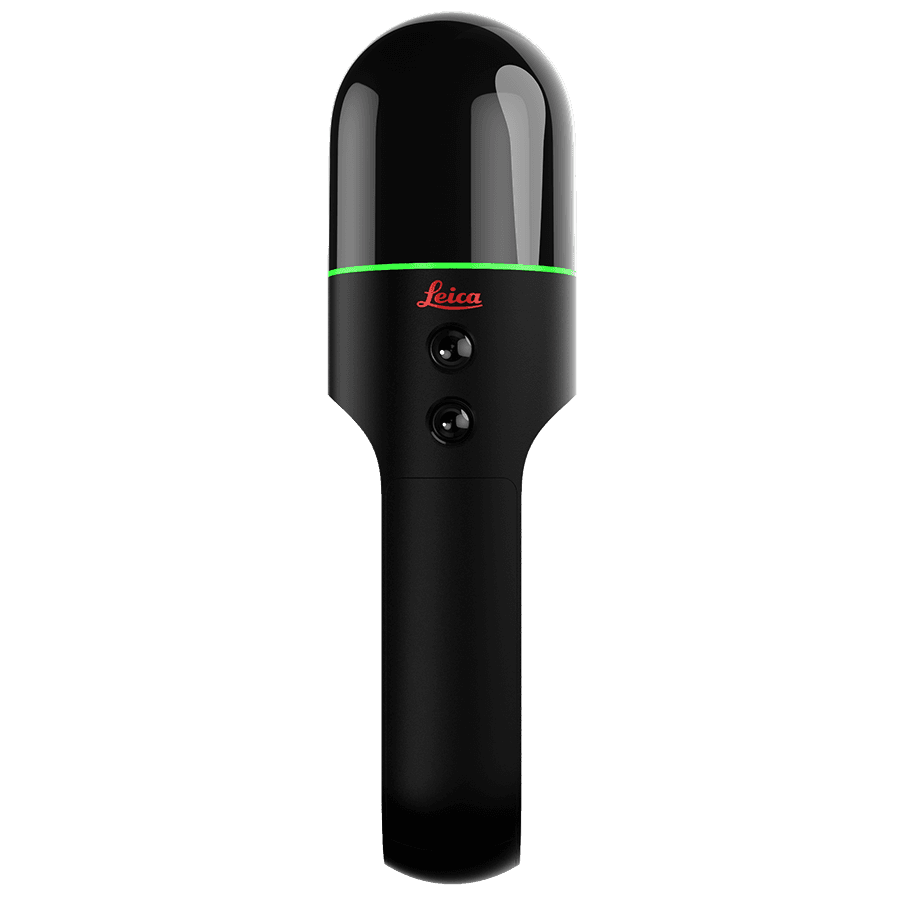
In addition to internal use, OAO provides laser scanning as a standalone service for architects, engineers, developers, contractors, and owners who require reliable spatial data at any project stage. Services include high-resolution scanning, registered point cloud delivery, BIM and CAD integration, existing conditions modeling, and coordination support for design and construction teams.

Research Driven, Practice Tested
As part of our research and development practice, we study how spatial data can support faster approvals, clearer cost control, improved coordination, and more adaptable buildings. Insights from this work feed directly back into active projects, ensuring that technology serves design intent rather than driving it.
Final Thought
Laser scanning allows architecture to be designed with confidence and accountability. By grounding ideas in precise spatial knowledge, OAO creates work that is more responsive, efficient, and aligned with real conditions. Whether embedded within an OAO project or delivered as a supplemental service, laser scanning strengthens outcomes for everyone involved.
This approach is applied in adaptive reuse housing projects, where accurate documentation is critical.
Let’s keep in touch.
Discover more about high-performance web design. Follow us on Twitter and Instagram.